

How Kitchen Equipment and Foodservice Supply Merchants Can Use WeiCity: From Product Showcase to Customer Purchasing
Bring together equipment categories, specifications and uses, accessory supplies, and purchasing requirements so customers can more easily understand products, check their needs, and confirm supply.
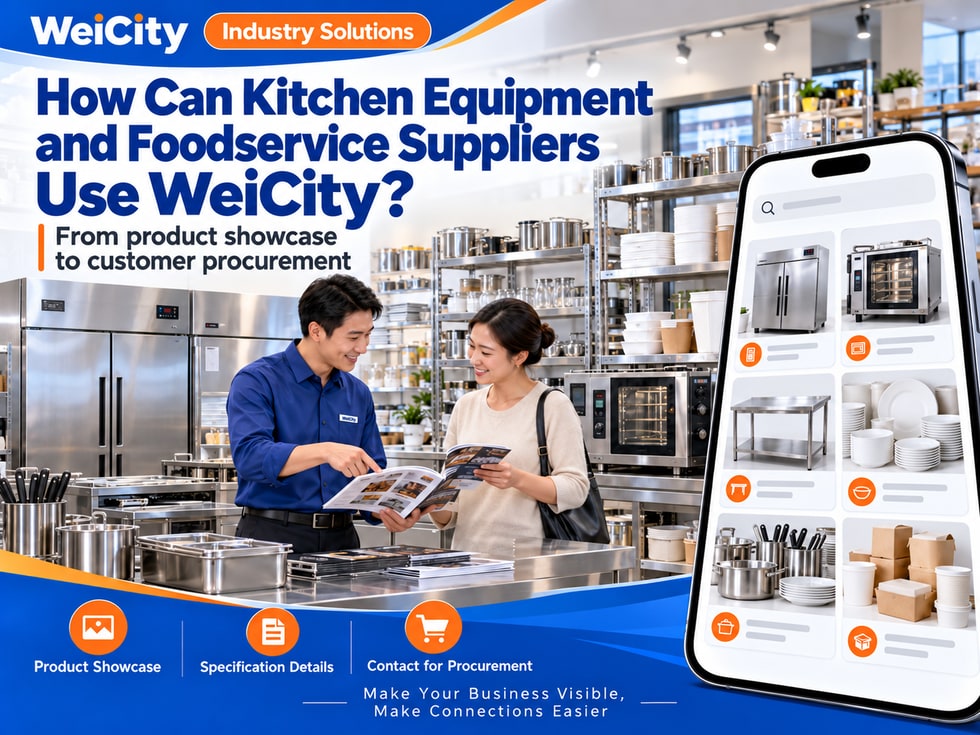
How can kitchen equipment stores, foodservice supply providers, commercial kitchenware and tableware merchants use WeiCity? Build a merchant channel that makes it easy for restaurants, coffee shops, and other customers to browse, request quotes, and get in touch, using product categories, specification introductions, application cases, and purchasing guides.
“What equipment do I need to prepare for a new restaurant?”
“Will this refrigerator fit in the kitchen?”“Is there a work table suitable for a coffee shop?”
“How many pieces are in a case of tableware?”“Does the equipment purchase include delivery and installation?”
When customers purchase kitchen equipment and foodservice supplies, they usually need to first find products, then confirm size, capacity, usage conditions, and related services.
💡 With WeiCity, you can create your own merchant channel and organize your equipment, supplies, and procurement information, so customers can first understand what you supply, then contact you with specific needs.
✅ Commercial kitchen equipment storesDisplay the cooking, refrigeration, and other equipment you actually supply.
✅ Stainless steel kitchenware merchantsIntroduce work tables, shelving, sinks, and related products.
✅ Tableware and foodservice supply vendorsOrganize bowls, plates, cups, cutlery, and other supplies.
✅ Coffee shop and beverage equipment merchantsDisplay the equipment and supporting products you actually operate with.
✅ Baking equipment suppliersIntroduce ovens, mixing equipment, and related tools.
✅ Foodservice packaging merchantsExplain food containers, takeaway packaging, and sales specifications.
📌 Introduce products according to your actual business scope, and specify which items include delivery, installation, training, or after-sales service.
You can organize them by use:
🔹 Cooking and heating equipmentDisplay by equipment type, specifications, and conditions of use.
🔹 Refrigeration and storage equipmentIntroduce sizes, capacities, and actual product series.
🔹 Food preparation and work tablesOrganize work tables, sinks, shelving, and related products.
🔹 Coffee and beverage suppliesDisplay the equipment, cups, and tools you actually supply.
🔹 Tableware and kitchen toolsClassify by material, size, and use.
🔹 Takeaway and packaging suppliesIndicate capacity, packaging quantity, and conditions of use.
💡 Show main categories and representative products first, then add detailed model information so customers of different sizes can find what they need.
Recommended to specify:
🔶 Example: Introduction to commercial refrigeration equipment
Model: State the exact name.Dimensions: Provide the actual width, depth, and height.Capacity: Provide according to the product information.Power supply: Indicate the corresponding specifications.Installation: Explain ventilation, placement, and other requirements.Purchasing: Contact us to confirm stock, prices, and delivery.
📌 Parameters should be based on the corresponding product information. Do not judge whether equipment suits a customer's work needs based only on appearance or name.
It is recommended to prepare:
🔹 Overall photosShow the equipment's appearance and structure.
🔹 Operating positionsShow the control panel and related functions.
🔹 Model and specification labelsMake it easy to verify the exact product.
🔹 Size DiagramInclude accurate labels.
💡 For work tables, sinks, and shelving, photograph the tabletop, underside, and connection details to help customers understand the actual structure.
📌 Images should correspond to the model being sold. Whether accessories and supplies shown in the photos are included should be stated separately.
You can include a concise purchasing guide in your channel.
Suggest that customers provide:
1️⃣ Business useRestaurant, coffee shop, bakery, canteen, or other venue.
2️⃣ Products neededProvide names, model numbers, or a purchase list.
3️⃣ Expected usage requirementsDescribe what will be prepared, how often it will be used, and related requirements.
4️⃣ Available spaceProvide site photos and dimensions.
5️⃣ Known site conditionsFor example, power supply, water supply, drainage, and access conditions.
6️⃣ Quantity and budgetHelps compare products and supply options.
7️⃣ Desired delivery dateIndicate whether it needs to align with opening or renovation schedules.
🔶 For example:
“Please send us your equipment list, intended use, space dimensions, and required dates. We will confirm supply options and quotes based on the products and site conditions.”
📌 More complex equipment configurations may require further discussion or an on-site inspection. Installation compatibility cannot be guaranteed based on a list alone.
Recommended items to confirm:
✅ Actual equipment dimensions
✅ Usable space at the placement location
✅ Operating and door-opening clearance
✅ Ventilation clearance required by the product
✅ Doorways, corridors, and turns
✅ Floors, elevators, and loading conditions
✅ Whether disassembly or special handling is required
💡 Site photos combined with dimension information can help make a preliminary assessment of transport and placement conditions.
📌 A equipment's external dimensions do not equal the full installation space required. Confirm this together with operation, maintenance, and product requirements.
Recommended to specify:
🔹 Material and product series
🔹 Size or capacity
🔹 Color and style
🔹 Quantity per pack or per case
🔹 Actual selling unit
🔹 Cleaning and usage requirements
🔹 Whether the same item can be reordered
🔶 For example:
“This plate is sold in the packaging specified. Size and quantity per case are listed in the product description. Please contact us to confirm bulk pricing, stock, and restocking arrangements.”
📌 Heat resistance, dishwasher suitability, or other performance characteristics should be based on the relevant product information.
Recommended to specify:
✅ Container material
✅ Capacity and size
✅ Whether lids are included
✅ Quantity per pack and per carton
✅ Applicable foods and temperature conditions
✅ Whether it is suitable for the corresponding heating method
✅ Whether customization is available
✅ Minimum order quantity
💡 You can show photos of the container, lid, and assembled set so customers can check which parts match.
📌 Boxes and lids that look similar may not be compatible. Materials and use conditions should also be confirmed for the specific product.
Suggested content:
🔹 Models and specifications corresponding to the price
🔹 Pricing by piece, set, pack, or carton
🔹 Whether accessories are included
🔹 Whether transportation, handling, and installation are charged separately
🔹 Whether ordering is required
🔹 Bulk purchase terms
🔹 Quote validity period and payment arrangements
🔶 For example:
“The displayed price applies to the product and specifications described in the notes. Transportation, installation, extra accessories, and other services will be specified separately in the quotation.”
📌 Equipment prices may not include on-site works or related supporting items. State clearly the actual scope of service.
If the merchant actually provides these services, you can explain:
✅ Installation location and on-site conditions
✅ Power, water supply, and drainage requirements
✅ Whether gas or exhaust connections are involved
✅ Whether other trades need to cooperate
✅ Whether setup and testing are included
✅ Whether operating instructions are provided
✅ What the customer needs to prepare in advance
🔶 For example:
“For equipment that requires installation, please provide site information in advance. We will explain product requirements and the scope of service, then confirm installation, testing, and coordination matters.”
📌 Projects involving electricity, gas, drainage, ventilation, or fixed installation should be verified and handled by qualified personnel.
Recommended to specify:
🔹 Actual delivery areas
🔹 How delivery fees are calculated
🔹 Scope of loading, unloading, and handling
🔹 Whether carrying upstairs is included
🔹 Site access arrangements for large equipment
🔹 Receiving contact person
🔹 How to inspect upon delivery
💡 For large equipment, you can confirm in advance the vehicle parking, freight elevator, and access times permitted by the site.
📌 Delivery to an address, moving to a designated position, and completing installation are different services. State separately whether each is included.
Suggested content:
✅ Product warranty period
✅ Items covered
✅ How parts and labor are handled
✅ Whether on-site service is available
✅ Service areas and fee conditions
✅ Routine maintenance information
✅ Information needed when reporting a repair
🔶 For example:
“If equipment has a problem, please provide the model, order details, a description of the fault, and related photos. We will confirm handling arrangements based on the actual coverage and scope of service.”
📌 Do not describe a warranty that applies to some products as applying to all equipment. Consumables, misuse, and other restrictions should be explained according to the actual terms.
You can ask customers to provide:
🔹 Business type and project location
🔹 Product list and quantities
🔹 Brand or specification requirements
🔹 Whether substitute models are acceptable
🔹 Renovation and site access timing
🔹 Delivery and installation requirements
🔹 Preferred delivery sequence
🔶 For example:
“Welcome to share your new store purchase list and project timeline. We will confirm products, quotations, and delivery arrangements based on our actual supply capacity. If a substitute model is needed, we will check with you first.”
💡 If the list is not yet complete, you can first learn which categories the merchant actually supplies, then confirm items one by one.
📌 Supplying products does not mean including a full kitchen design or all construction works. Describe accurately the services that can be provided.
🔹 About UsIntroduce the store, supply scope, and target customers.
🔹 Equipment CategoriesOrganize by cooking, refrigeration, food preparation, and other uses.
🔹 Tableware and Packaging SuppliesDisplay specifications, quantities, and selling units.
🔹 Products and Application CasesIntroduce authorized on-site use and supply contents.
🔹 Purchasing and Installation GuideOrganize lists, dimensions, and on-site information requirements.
🔹 Delivery and After-SalesExplain delivery, warranty, and repair arrangements.
💡 At the start, you can add main categories, representative products, and a purchasing guide first, then add detailed models later.
🔶 Customer asks: “I'm opening a new restaurant. What do you supply?”
Suggested reply:“Hello, here are our equipment and supplies categories. Please share your business type and purchase list, and we will help confirm available products, specifications, and prices.”
🔶 Customer asks: “Will this equipment fit in my kitchen?”
Suggested reply:“Please provide the placement location, door, corridor, and elevator dimensions, along with site photos. We will first check the equipment and transport conditions, then confirm arrangements.”
🔶 Customer asks: “Can you quote for a batch of tableware?”
Suggested reply:“Please share the styles, sizes, quantities, and required date. We will confirm the quotation based on actual packaging, stock, and delivery requirements.”
1️⃣ Basic Business InformationName, address, business hours, and contact details.
2️⃣ Main Product CategoriesOrganize the equipment and supplies actually supplied.
3️⃣ Representative Product ImagesNote the model, dimensions, specifications, and pack quantity.
4️⃣ Purchasing Information ChecklistTell customers what information they need to provide.
5️⃣ Delivery and After-Sales NotesOrganize delivery, installation, maintenance, and repair arrangements.
✅ Do product models match the images?
✅ Are dimensions, capacity, and energy requirements accurate?
✅ Are accessories and pack quantities clearly stated?
✅ How are usage and installation conditions confirmed?
✅ Are transportation, handling, and installation included?
✅ Is the after-sales service scope specific?
✅ Are contact details correct?
Once equipment, supplies, and a purchasing guide are organized in the channel, they can support daily promotion, customer replies, and catering project purchasing communication.
Customers can first understand your supply scope, then provide lists, space, and timing needs. Merchants can use this to confirm selection, quotations, and delivery arrangements.
Want to learn how to set up a kitchen equipment and catering supplies merchant channel?
Feel free to contact us through the contact information on the official WeiCity channel, and we can work together to organize display content suited to your business.
WeiCityMake your business visible and your contact easier.