

12 💎 Free articles attract customers, paid articles deliver deeper value
Use free content to build trust, and organize complete tutorials and in-depth methods into paid articles, so readers clearly understand the value worth paying for.
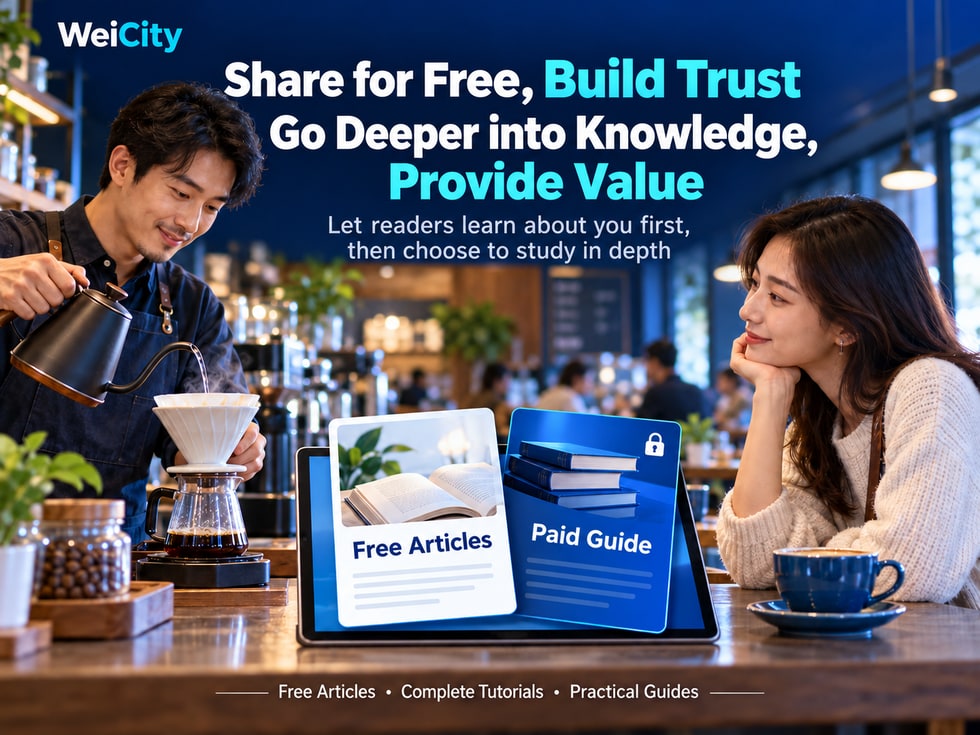
Which content suits free sharing, and which is worth organizing into a paid article? With the WeiCity article feature, merchants and creators can use free articles to introduce their expertise and answer basic questions, then offer deeper knowledge through complete tutorials, case analyses, and practical guides. Clearly arranging these two types of content lets customers get to know you first, and makes it easier for readers who need it to decide whether to buy.
💬 "If I write everything for free, how do I make money?"
💬 "If I charge from the start, readers don't know me yet. Why would they buy?"
💬 "How should free articles and paid articles be arranged?"
Start from readers' needs: use a free article to solve a basic problem, then use a paid article to help those who need to learn more deeply complete more specific tasks.
When readers first encounter you, they usually want to know:
🔹 What fields are you familiar with?
🔹 Is your explanation clear?
🔹 Does your experience help them?
A useful free article lets readers feel your expertise directly.
For example:
☕ A coffee merchant shares "How should you store coffee beans after opening the bag?"
🌱 A gardening merchant shares "When a plant's leaves turn yellow, what should you check first?"
📷 A photography teacher shares "How can you avoid obvious glare when photographing products?"
Explaining one small question clearly is the beginning of building trust.
When readers need complete steps, in-depth explanations, or specific methods, you can organize that content into a paid article, set a price on WeiCity, and let readers who need it pay to unlock the full text.
Content suitable for in-depth organization includes:
✅ Complete tutorials from preparation to completion
✅ Judgment and handling methods for different situations
✅ Case analyses with process explanations
✅ Practical checklists that can be followed step by step
✅ Common mistakes, causes, and steps for improvement
☕ For example, how could a coffee merchant arrange this?
📝 Free article: How should you store coffee beans after opening the bag?
Explains storage containers, placement environments, and common misconceptions, so that an average customer can improve their daily storage method after reading.
💎 Paid article: A Complete Practical Guide to Pour-Over Coffee for Beginners
Further covers equipment preparation, grind size, water temperature, coffee-to-water ratio, pouring steps, and how to adjust when the coffee tastes too sour or too bitter.
The two articles serve different needs:
🔹 Customers who want to learn about storage methods can read the free article.
🔹 Readers who want to systematically learn pour-over brewing may consider buying the complete guide.
When each article has a clear purpose, readers can choose more easily.
Before publishing, include the following in the title, introduction, or summary:
👤 Who it is for
Is it for beginners, people with some background, or readers facing a specific problem?
📖 What it includes
What steps, methods, examples, or checklists does it contain?
🛠️ What readers can do after reading
What operation can they complete, or what problem can they judge more clearly?
For example, "Pour-Over Coffee Tips" is rather general; "Beginner's Pour-Over Guide: From Equipment Preparation to Adjusting Sourness and Bitterness" makes the scope of the content easier to understand.
🤝 Free articles should also provide complete help
A free article should deliver on the promise of its title so readers gain practical value from reading it.
If the title is "Three Ways to Store Coffee Beans," then explain all three methods clearly. Those who want to learn more in depth can, through a clear introduction, decide whether another complete guide suits them.
This arrangement lets readers read with confidence and makes them more likely to trust your paid content.
Free articles help customers recognize your experience and services; paid articles give you the opportunity to organize deeper knowledge into a content product.
For example, after readers understand your coffee bean storage advice, they may go on to learn about your products; people who want to learn brewing can also choose to buy your practical guide.
The connection between content and business comes from the practical help you provide.
Start with the questions customers ask most often:
① Write a free article that solves a basic problem.
② Organize in-depth content that requires more steps and explanation.
③ Clearly explain who the paid article is for and what it includes.
④ Set prices based on content value and reader needs.
Keep observing readers' questions, then decide which additional content is worth adding.
👉 Start writing: https://wei.city