

10 🚀 After your merchant channel goes live, how do you find your first customers?
📣 From sharing with regulars and local exposure to ongoing content, help your new channel start working for you
💡 Going live with a merchant channel is only the first step. Your first customers usually come from regulars who already know you, followers on social media, nearby communities, and partners. This article explains how to share your channel, set up QR codes, publish useful content, run welcome offers, and keep information updated, so that more customers discover the channel and take action such as inquiring, visiting, booking, or ordering.
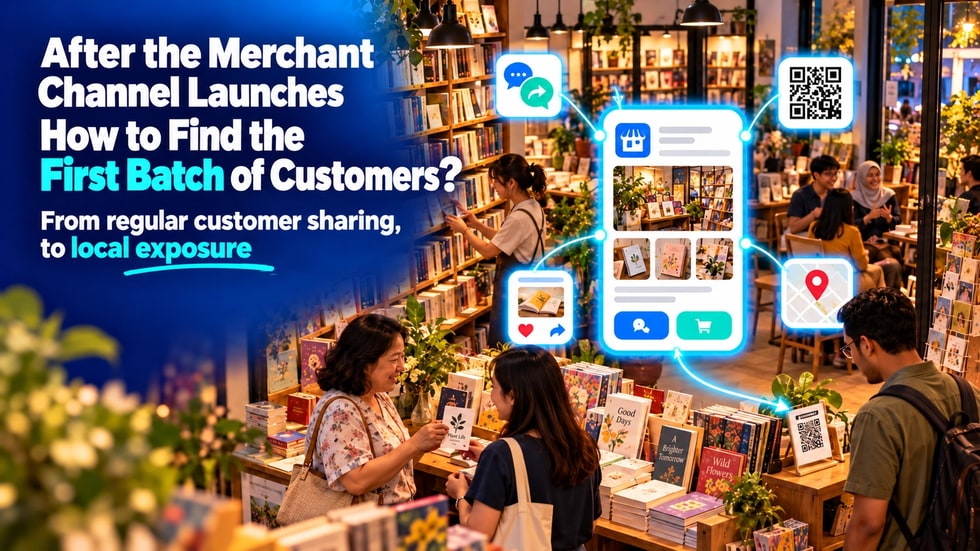
After a merchant channel is created, a large number of customers will not appear automatically.
It is more like a ready-made online storefront. Merchants need to actively tell customers where to find it and provide content worth visiting.
Your first customers usually do not need to be found among completely unfamiliar people.
They may have already bought your products, followed your social accounts, passed by your physical store, or asked friends about your business.
Merchants can start with the people closest to them and gradually guide existing relationships to the new channel.
Before sharing the channel, browse it once from the customer's perspective.
If customers cannot find important information after entering the channel, even if they are exposed to it, they may leave quickly.
• Is the merchant name clear?
• Are the brand avatar and cover complete?
• Is the merchant introduction easy to understand?
• Are the address, business hours and contact details correct?
• Are the main products or services displayed?
• Are the images authentic and clear?
• Do customers know what to do next?
• Do the contact, booking, cart or order buttons work properly?
Everything does not need to be perfect, but at least make sure customers can recognize the merchant, find important information and take the next step smoothly.
Existing customers are the most direct first visitors to a new channel.
They already know your products or services, and they can more easily understand what the channel can bring them in terms of convenience.
Merchants can share the channel in natural ways:
• Provide the channel link after a customer completes a purchase
• Tell regular customers they can check new products and offers via the channel
• Invite customers who have made inquiries to view the full information
• Attach the channel link in after-sales messages
• Ask customers who support the brand to share the channel with friends
When sharing, do not just send a link without explanation.
Briefly tell customers what they will see after entering the channel, such as the full menu, latest products, booking methods or member offers.
If a merchant already operates Facebook, Instagram, TikTok or other social platforms, the channel link can be placed where it is easy to find.
• Social account bio
• Pinned posts
• Stories
• Video descriptions
• Merchant introduction page
• Auto-reply messages
• Pinned replies in post comments
Social content attracts attention, while the merchant channel provides full information and supports the next step.
When publishing content, you can use clear calls to action:
• To view the full products, please visit the merchant channel
• To learn about prices and booking methods, click the channel link
• The latest menu and business hours have been updated on the channel
• Visit the channel to see this month's promotions
Rather than repeatedly posting the same advertisement, telling customers what they will gain by clicking is more likely to prompt action.
Merchants with a physical store, stall or pickup point can place the channel QR code where customers can easily see it.
• Store entrance
• Checkout counter
• Dining tables or menus
• Product packaging
• Shopping bags
• Business cards
• Receipts or thank-you cards
• Exhibition and market booths
A clear explanation should be added next to the QR code.
For example:
• Scan to view the full menu
• Scan to view new arrivals and offers
• Scan to book a service
• Scan to buy again
• Scan to contact the merchant
Do not just display a QR code without explaining its purpose.
When customers know what they will get after scanning, they are more willing to take action.
A local merchant's first customers are often located nearby.
Merchants can share useful information through suitable community channels.
• Residential or commercial district communities
• Local event pages
• School, office building, or community notice boards
• Local interest groups
• Markets, exhibitions, or festival events
• Mutual referrals among nearby businesses
When promoting in the community, do not just repeat advertisements.
You can provide information relevant to local customers, such as store openings, community-exclusive services, nearby delivery areas, holiday business hours, or local event schedules.
The more relevant the content is to community needs, the easier it is to earn natural attention.
A merchant channel can do more than display information; through content, it can also help customers make decisions.
When first launching, you can start by publishing three to five practical articles.
• Introductions to the merchant and brand
• Recommendations for popular products or services
• What to know before a first purchase
• How to book, order, or visit in person
• Frequently asked questions and answers
• How to use products
• Production processes or service workflows
• Latest offers and business announcements
Practical content helps customers get to know the merchant and can also serve as material for ongoing sharing on social platforms.
Every piece of content should provide a clear next step, such as viewing products, contacting the merchant, booking a service, or entering the store.
When a new channel launches, you can set up an easy-to-understand welcome campaign to encourage customers to visit and try it for the first time.
• Receive a designated gift for the first inquiry through the channel
• New customers enjoy a welcome offer on their first booking
• Channel-exclusive product bundles
• Get a small gift by showing the channel page in store
• Enjoy a delivery discount when ordering before a specified date
Campaign rules must be clearly explained.
• Campaign start and end dates
• Applicable products or services
• Conditions of use
• Whether a booking is required
• Whether it can be combined with other offers
• How many times each customer can use it
Avoid setting too many conditions, and do not use exaggerated promotion that could mislead customers.
The goal of a welcome campaign is to encourage customers to complete a first action, not merely to pursue click numbers.
If your business serves customers similar to those of other merchants, consider joint promotion.
• Coffee shops and bakeries
• Photographers and makeup artists
• Fitness coaches and healthy meal merchants
• Flower shops and event planners
• Bookstores and education courses
• Pet supply stores and pet service merchants
Partnership methods can be simple.
• Share each other's merchant channels
• Run joint campaigns
• Place referral cards for partner merchants in your store
• Publish useful local content together
• Design combined services for customers
When choosing partners, make sure both businesses are genuine, services are reliable, and the partnership provides real value to customers.
If you are not sure where to start, you can follow the steps below.
Day 1
• Check merchant information, contact details, and business hours
• Test all buttons and links
Day 2
• Upload three to five main products or services
• Add clear images, prices, and descriptions
Day 3
• Publish one brand introduction
• Publish one guide to buying, booking, or visiting in person
Day 4
• Add the channel link to your social media profiles
• Publish a notice announcing the new channel launch
Day 5
• Add a QR code to your storefront, packaging, or business cards
• Invite regular customers to view the channel
Day 6
• Share useful information in suitable local communities
• Contact nearby merchants who may be potential partners
Day 7
• Review the content customers view and ask about most often
• Add information based on customer questions
• Plan the content to publish next week
This plan does not require a large budget upfront; the key is to get real customers using the channel.
After the channel launches, view counts can serve as a reference, but they should not be the only goal.
Merchants should pay more attention to whether customers take valuable actions.
• How many customers click contact details
• How many customers view products or services
• How many customers make inquiries
• How many customers book or visit in person
• How many customers add items to their cart or submit orders
• Which questions customers ask most often
• Which sharing methods bring more actual contacts
If many people view the channel but no customers take the next step, you may need to check whether product descriptions, prices, contact details, or action buttons are clear enough.
After you find your first customers, merchants still need to maintain the channel continuously.
• Update business hours
• Add new products or services
• Remove content for items no longer available
• Publish the latest events and offers
• Answer frequently asked customer questions
• Showcase recent work and business updates
• Keep contact details valid
Stable and genuine updates are more valuable than publishing a large number of repetitive ads in a short period.
The first customers of a new channel usually come from people who already know and trust you.
First let regulars, social media followers, nearby communities, and partners know the channel exists; then, through clear information, useful content, and good service, encourage them to keep using and sharing it.
Every inquiry, visit, booking, and order can help the merchant understand what customers truly need.
By continuously improving the channel based on this feedback, it will gradually become an online business entry point that can connect with customers over the long term.
👉 Share your WeiCity merchant channel so your first customers can get to know you, find you, and move toward contacting and choosing your business.