

How Packaging Material and Packing Supply Merchants Can Use WeiCity: From Specification Showcase to Customer Purchasing
Bring together packaging categories, size specifications, sales units, and custom requirements so customers can more easily find materials, check quantities, and contact you to order.
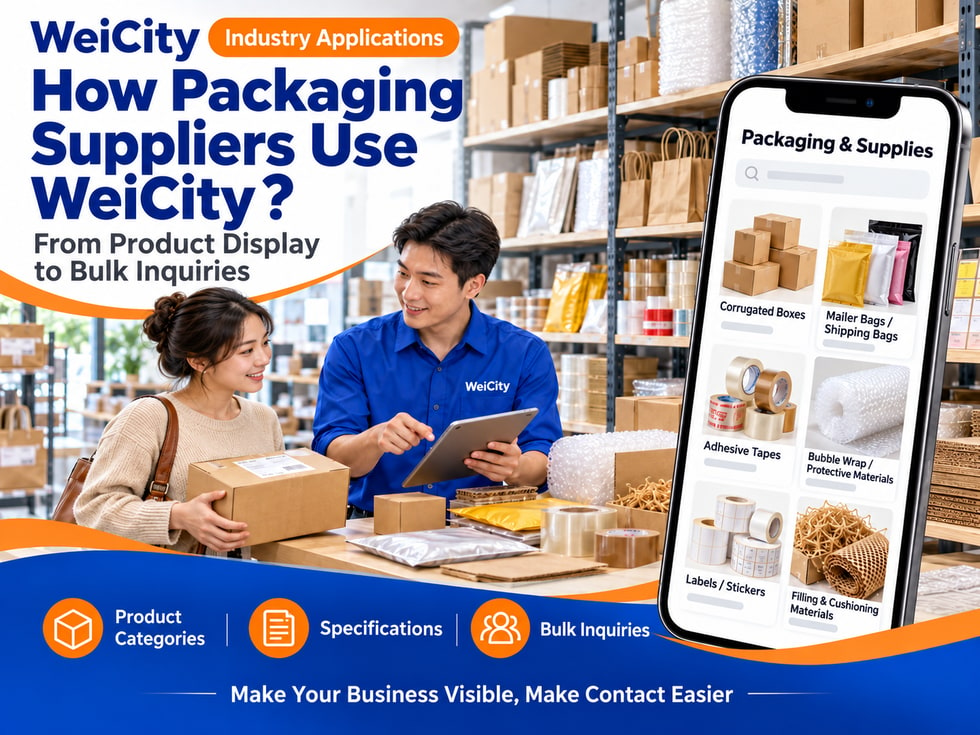
How can carton, courier bag, cushioning material, tape, and packaging supply providers use WeiCity? Build a merchant channel that makes it easy for e-commerce, store, and corporate customers to browse, request quotes, and get in touch, using product categories, specification photos, packaging references, and purchasing guides.
"What size carton should I use for this product?"
"How many courier bags are in one pack?"
"Is there cushioning material suitable for fragile items?"
"Can cartons be printed with our logo?"
"We need a batch of packaging every month. Can you arrange supply?"
When customers buy packaging materials, they usually need to find the category first, then confirm size, material, package quantity and supply timing.
💡 With WeiCity, you can create your own merchant channel and organize product specifications, usage references and purchasing methods, so customers can browse first and then contact you with specific requirements.
✅ Carton and box suppliers Show available standard sizes and the custom services actually offered.
✅ Courier bag and packaging bag merchants Organize products by material, size and sealing method.
✅ Cushioning and protective material merchants Introduce bubble wrap, filling materials and other supplies actually available.
✅ Tape and packing supply stores Show tape, stretch film, strapping and related tools.
✅ E-commerce packaging suppliers Organize shipping packaging combinations for reference.
✅ Enterprise packaging material suppliers Explain bulk purchasing, customization and supply arrangements.
📌 General packaging, food-contact packaging and other special-purpose products should each have their actual scope of use stated.
You can organize the content by packing stage:
🔹 Outer packaging Cartons, boxes, courier bags and other products.
🔹 Internal protection Bubble wrap, foam, paper filling and related materials.
🔹 Sealing and securing Tape, stretch film, strapping and matching supplies.
🔹 Bags and storage packaging Shown by material, size and use.
🔹 Labels and marking supplies Organize labels, stickers and related products actually sold.
🔹 Custom packaging Explain the size, printing and production scope.
💡 You can also organize reference content by use, such as e-commerce shipping, store dispatch, handling and warehousing.
It is recommended to state:
✅ Product name and number
✅ Material and structure
✅ Length, width, height or other dimensions
✅ Thickness, length or related specifications
✅ Quantity per pack and per carton
✅ Actual sales unit
✅ Available colors
✅ Usage conditions and supply arrangements
🔶 Example: carton introduction
Product number: helps customers identify the item accurately. Size: state length, width, height and units. Measurement: explain whether dimensions are internal or external. Structure: fill in according to actual product information. Packaging: state the quantity per bundle or pack. Purchasing: contact us to confirm stock, price and delivery.
📌 Dimension order, units and measuring method should be clear, so customers do not buy packaging that cannot fit the goods.
It is recommended to prepare:
🔹 Overall Product Show the appearance and structure.
🔹 Unfolded or open state Helps customers understand assembly and use.
🔹 Size diagram Include accurate labels.
🔹 Material details Show thickness, sealing or surface condition.
🔹 Quantity per pack Explain how items are delivered by pack, roll or carton.
💡 Cartons can show both flat and assembled states; for bags, take clear photos of the opening and sealing position.
📌 State separately whether the items, filling materials and tools shown in images are included.
You can include a concise purchasing guide in the channel.
Suggested information for customers to provide:
1️⃣ Packaging use Shipping, store dispatch, handling, warehousing or other needs.
2️⃣ Product information State shape, size and weight.
3️⃣ Product type Cartons, bags, cushioning materials or other supplies.
4️⃣ Desired specifications If you currently use packaging, you may provide its number and a photo.
5️⃣ Quantity needed State pieces, packs, rolls, bundles or cartons.
6️⃣ Whether customization is needed State color, text, logo and other requirements.
7️⃣ Delivery date and location To help confirm supply and shipping.
🔶 Example:
"Please send the product size, weight, packaging use and required quantity. If you have photos of current packaging, you may send them too, and we will check the available specifications and quote."
📌 Beyond product dimensions, also consider the space needed for lining, cushioning and sealing.
You can ask customers to explain:
✅ Complete product dimensions
✅ Are there protruding or fragile parts?
✅ One item per carton or multiple items?
✅ Is an inner tray or divider needed?
✅ Arrangement of cushioning material
✅ Preferred opening and packing method
🔶 Example:
"Please provide the product dimensions and packing quantity. We will first compare available standard sizes. If cushioning or lining is needed, we will also check the space required."
💡 For multi-item packs, you can provide photos of the actual arrangement to help discuss sizing.
📌 Preliminary suggestions do not mean transport protection has been fully verified. Particularly heavy, fragile or irregularly shaped products may require trial packing and further assessment.
It is recommended to state:
🔹 Material type
🔹 Thickness, width and length
🔹 Whether sold by roll, sheet or another unit
🔹 Available cutting options
🔹 Method of use
🔹 Requirements for matching outer packaging
🔹 Applicable conditions in product information
💡 You can show actual packed items and filling references so customers understand how the material is used.
📌 Protection performance depends on the product, packaging structure and transport conditions. Do not promise that a particular material will prevent all damage.
Suggested details to explain:
✅ Product material
✅ Width and thickness
✅ Stated length or net weight
✅ Quantity per carton or pack
✅ Sealing or securing use
✅ Required matching tools
✅ Use and storage instructions
🔶 Example:
"This item is sold by roll. Width, length and quantity per carton are shown in the product description. For bulk purchases or other specifications, please contact us to confirm."
📌 Different specifications may use different measurement methods. When comparing prices, first confirm the corresponding length, weight and package quantity.
You may ask customers to provide:
🔹 Product and packaging use
🔹 Finished size
🔹 Material and structure requirements
🔹 Expected quantity
🔹 Logo, text and graphic files
🔹 Print colors and positions
🔹 Whether a sample is needed
🔹 Desired delivery date
🔶 Example:
"Please provide the size, material, quantity and design files. We will confirm the production method, minimum order conditions, sampling and quote."
📌 Use the version of artwork and text confirmed by the customer, and check the usage rights of related materials.
You can organize it as follows:
1️⃣ Check specifications Confirm size, materials and structure.
2️⃣ Check design Confirm text, graphics, colors and positions.
3️⃣ Confirm sample arrangements Explain sample type, cost and timing.
4️⃣ Check assembly Confirm size and use according to the agreement.
5️⃣ Confirm quote and order Explain quantity, costs and delivery arrangements.
6️⃣ Arrange production Proceed according to the version confirmed by both parties.
📌 There may be differences between mock-ups, samples and mass production; explain the confirmation standard and actual production conditions.
It is recommended to state:
✅ Specifications covered by the price
✅ Pricing unit
✅ Quantity per pack or carton
✅ Minimum order quantity
✅ Quote conditions for different quantities
✅ Whether sampling or setup fees are included
✅ Whether delivery is charged separately
✅ Quote validity period and payment arrangements
🔶 Example:
"Quotes are confirmed based on specifications, materials, quantity and customization. Sampling, additional processing and delivery fees will be stated separately in the quote."
📌 Distinguish between unit price, pack price and carton price to avoid customer misunderstanding.
If you actually provide these services, you can ask customers to state:
🔹 List of commonly used products
🔹 Expected quantity each time
🔹 Purchase frequency
🔹 Inventory or lead time requirements
🔹 Receiving location
🔹 Whether substitute specifications are acceptable
🔹 Reconciliation and payment method
🔶 Example:
"Please send your commonly used packaging list and purchase frequency. We will confirm ordering, delivery and settlement arrangements based on actual supply capacity."
💡 Keep accurate numbers and specifications so customers can reorder later.
🚚 What should be explained about delivery and receiving?
It is recommended to state:
✅ Actual delivery areas
✅ How shipping fees are calculated
✅ Packaging form at delivery
✅ Loading and unloading arrangements for bulky items
✅ Whether carrying upstairs is included
✅ Expected preparation and dispatch times
✅ How to check when receiving the goods
💡 Cartons and cushioning materials are bulky, so explain vehicle requirements, receiving space and handling conditions in advance.
📌 Delivery to an address and moving items to a designated location are different services. State clearly whether each is included.
You can introduce them based on the corresponding product documents:
🔹 Material composition
🔹 Whether it contains recycled material
🔹 Whether it can be reused
🔹 Recycling or disposal requirements
🔹 Corresponding certification documents, if any
📌 Recyclable, biodegradable and compostable are not the same concept. Related descriptions should be supported by evidence and state the applicable conditions. Avoid vaguely describing all packaging as "eco-friendly".
🔹 About Us Introduce the store, supply scope and service targets.
🔹 Product Categories Organize by cartons, bags, cushioning and sealing supplies.
🔹 Specifications & Packing Reference Show sizes, quantities and how to use them.
🔹 Customization & Sample Making Explain files required, minimum order quantities and confirmation process.
🔹 Business & Bulk Purchasing Organize lists, quantities and supply requirements.
🔹 Delivery & FAQs Introduce delivery, receiving and how to submit issues.
💡 To start, you can first add main categories, common specifications and a purchasing guide, then add detailed products later.
🔶 Customer asks: "What size carton do I need for this product?"
Suggested reply: "Hello, please provide the product size, weight, number of items per carton and whether cushioning material is needed. We will first compare the available specifications."
🔶 Customer asks: "How many courier bags are in one pack?"
Suggested reply: "Please provide the product number or size. We will check the corresponding material, pack quantity, price and stock."
🔶 Customer asks: "Can you print our logo on the cartons?"
Suggested reply: "Welcome to send us the size, quantity and logo file. We will first confirm the material, printing method, minimum order requirements and production time."
1️⃣ Basic merchant information Name, address, business hours and contact details.
2️⃣ Main Packaging Categories Organize the materials and supplies actually offered.
3️⃣ Representative Product Images Indicate size, material and pack quantity.
4️⃣ Purchasing & Customization Guide Tell customers what information they need to provide.
5️⃣ Supply & Delivery Information Organize sampling, ordering, delivery and receiving arrangements.
✅ Are the dimension order and units clear?
✅ Are internal and external dimensions distinguished?
✅ Are material, length and quantity accurate?
✅ Is the selling unit for each price clear?
✅ How are customization and sampling confirmed?
✅ Are performance and environmental claims supported by evidence?
✅ Are the contact details correct?
After organizing products, specifications and purchasing guides in the channel, you can use it for daily promotion, customer replies and bulk supply communication with businesses.
Customers can learn about your packaging materials first, then provide products, quantities and customization needs. Merchants can also use this to confirm specifications, quotations and delivery arrangements.
Want to learn how to set up a Packaging Materials & Packing Supplies merchant channel?
Feel free to contact us through the official WeiCity channel contact details, and we can organize display content suitable for your business together.
WeiCity Make your business visible, and make contact easier.