

13 💬 Customers have already asked questions. How should merchants reply?
🤝 From the first response and confirming needs to quoting and following up, make it easier for inquiries to turn into bookings or orders
💡 When customers reach out with questions, it means they are already interested in your product or service. Besides replying promptly, merchants need to confirm needs, offer suitable options, clearly explain prices and conditions, and tell customers what the next step is. This article outlines a practical communication process and ready-to-use reply examples to help merchants reduce misunderstandings and improve the inquiry experience.
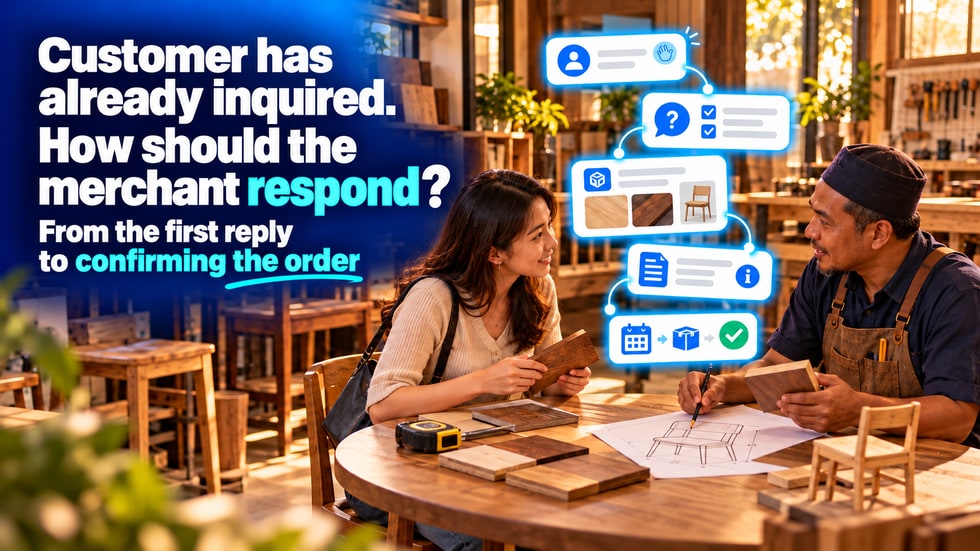
When a customer contacts you first, it means they have already taken an important step.
They may have already looked at your brand introduction, products, services, or content, and now they need more information before deciding whether to book, visit, or place an order.
At this stage, reply speed matters, but clarity, accuracy, and courtesy matter even more.
If a merchant only sends a price, gives an overly brief reply, or does not explain the next step, the customer may still not know how to proceed.
A good inquiry exchange should help customers answer the following questions:
• Has the merchant received my message?
• Does the merchant understand what I need?
• Which product or service suits me?
• What are the prices and terms?
• What information do I need to provide next?
• How do I confirm a booking or order?
You can follow the steps below when replying.
After a customer sends an inquiry, their biggest concern is whether the merchant has seen it, or how long they will have to wait.
If you can respond right away, you can first reply politely and begin understanding their needs.
Sample reply:
Hello, thank you for contacting us. Which product or service would you like to know more about? I will provide relevant information based on your needs.
If you cannot reply in detail right away, you can also state when you expect to respond.
Sample reply:
Hello, we have received your message. We are currently handling other orders and expect to reply to you by 3:00 PM today. Thank you for your patience.
Do not promise to "reply immediately" if you cannot actually do so.
Giving a realistic and reasonable time is more professional than leaving customers waiting for a long time without any explanation.
If customers contact you outside business hours, you can set up a simple automatic reply.
Sample reply:
Hello, thank you for contacting us. Our consultation hours are Monday to Saturday, 10:00 AM to 6:00 PM. We will reply to you as soon as possible during our next business hours.
Do not send a large amount of product information or directly recommend the most expensive option before you understand the need.
You can start by asking one to three of the most important questions.
Food and beverage merchants can ask:
• What date and time do you need?
• Approximately how many servings do you need?
• Do you prefer self-pickup or delivery?
Service merchants can ask:
• Which service would you like to book?
• What date and time would suit you?
• Do you have any special requirements?
Custom-made product merchants can ask:
• What size or quantity do you need?
• What material or style would you like to use?
• When do you expect it to be completed?
Education merchants can ask:
• What is the learner's age or skill level?
• What would you like to learn?
• Would online or in-person classes be more suitable?
Questions should be related to the recommendations you provide.
Do not ask for ID numbers, home addresses, or other unnecessary sensitive information at the start.
If you need a lot of information, you can ask in stages to avoid asking customers to fill in a very long form at once.
After confirming the need, you can offer one to three suitable options.
Too many choices may make it harder for customers to decide.
Reference structure:
Based on the information you provided, the following two options are currently most suitable:
• Basic option: what it includes and what kind of need it suits
• Complete option: what additional services it adds and what situations it suits
If you want everything completed before a specific date, I recommend the complete option, because it already includes the related preparation and arrangements.
When recommending, explain the reason instead of only saying "this one is the best."
Also, do not recommend a product or service that clearly does not fit the customer's needs just to complete an order.
Explaining the differences clearly can help customers make a decision that suits them.
When customers ask about prices, you should try to provide complete information.
Do not send just a number without explaining what it includes.
A clear quote or price explanation can include:
• Product or service name
• Items included
• Quantity, size, or duration
• Base price
• Possible additional fees
• Delivery, self-pickup, or in-store options
• Completion or service time
• Deposit and payment arrangements
• Change, cancellation, or after-sales terms
Sample reply:
The price of this service is the specified amount, including basic processing and one adjustment. A specified deposit is required when booking, and the remaining balance can be paid on the day of service. If other items are needed, we will explain the fees before confirmation.
If you cannot provide a fixed price for the time being, you can explain how the price is calculated.
Sample reply:
This custom service is quoted based on size, material, and completion time. You may provide reference images and estimated dimensions. After we confirm, we will first send a complete quote, and production will begin only after you agree.
Do not hide fees that the customer would reasonably expect to pay.
The clearer the price, the fewer chances there are for misunderstandings later.
Merchants do not need to re-explain all information in every inquiry.
If the channel already has complete introductions to products, services, frequently asked questions, or processes, you can share the relevant pages with customers.
• Product details
• Service plans
• Menu
• Work case studies
• Instructions for use
• Appointment process
• Delivery information
• Frequently asked questions
When sharing a link, explain what the customer can see on the page.
Sample reply:
This is a complete introduction to the related service, including the service content, timing, and preparation items. You can review it first, and if you have any questions, I can help you confirm them.
Do not send too many unrelated links at once.
Simply choose the content that best matches the customer's current question.
After answering a question, do not let the conversation end at "OK" or "Thank you."
Clearly explain what the customer can do next.
• Choose a suitable plan
• Provide a date and time
• Confirm quantity or specifications
• Submit necessary information
• Pay the deposit
• Completing an order
• Wait for the merchant's confirmation
Sample reply:
If you would like to book, please tell me a date and time that suits you. Once I confirm the schedule, I will send you the booking and deposit information.
Or:
If this plan suits you, I can hold it for you until 6:00 PM today. After confirmation, we will then arrange payment and delivery.
Next steps should be specific, but do not use false urgency to pressure customers into deciding immediately.
Some customers need time to compare options, confirm their budget, or discuss with family members.
If a customer does not continue the conversation, you can send one polite follow-up after a reasonable period.
Sample reply:
Hello, I would like to check whether you still need this service. If you have any questions about the plan, date, or price, please let me know and I will help you confirm.
If a product or booking slot truly has a deadline, you can clearly explain the actual situation.
Sample reply:
Hello, the Saturday afternoon slot you asked about earlier is still available for booking. If you need it, I can hold it for you until 3:00 PM tomorrow; after that, we will need to reconfirm based on the latest availability.
If a customer clearly says they do not need it for now, do not keep sending messages.
Respecting the customer's decision is also part of good service.
First Response
Hello, thank you for contacting us. To help identify a suitable option, could you tell me which product or service you need, the date, and approximately how many you need?
Confirm Needs
Thank you for providing the information. Based on your needs, I would like to confirm two more things: which specification you would like to use, and whether you need delivery?
Offer Options
Based on your needs, there are two suitable options at the moment. The basic option suits simple use, while the complete option includes additional services. I will list both separately so you can compare them.
Explain Next Steps
If you confirm this option, please reply with a suitable date and time. Once we confirm the arrangement, we will send you the order and payment information.
Polite Follow-Up
Hello, we would like to check whether you still need our assistance. If you have any questions about pricing, timing, or options, please let us know directly.
These contents can serve as a reference, but they should not be copied word for word to every customer.
Adjust them based on the actual question so that replies sound natural.
Merchants can check whether any of the following situations occur:
• Only replying with a price without explanation
• Customer asks several questions but only one is answered
• Sending a large amount of irrelevant material at once
• Using too much technical jargon that customers cannot understand
• Asking customers to repeat information they have already provided
• Not replying for a long time without explaining the expected waiting time
• Leaving out necessary fees from a quote
• Not telling customers what the next step is
• Using false time-limited pressure
• Continuing to follow up after the customer has declined
Good communication is not about saying the most, but about making it easier for customers to understand and decide.
Merchants operate in different ways, so there is no fixed time that suits every industry.
What matters more is setting realistic response expectations.
• During business hours, try to confirm receipt of messages as quickly as possible
• If you cannot handle a request immediately, state the expected reply time
• When checking stock or availability, tell customers you are confirming
• When a quote will take longer, explain when it will be completed
• Outside business hours, you can set up an automatic reply
Merchants do not need to be online at all times, but they should avoid leaving customers unsure whether their message has been seen.
If the same questions come up often, you can organize the answers into your merchant channel.
• Appointment process
• Price explanations
• Delivery range
• Booking conditions
• Payment methods
• Preparation requirements
• Changing and canceling arrangements
• Frequently asked questions
This reduces repeated replies and helps customers learn the basic information before making an inquiry.
Merchants still need to provide assistance based on each customer's actual situation. Sending only a link without responding to questions is not sufficient.
During an inquiry, merchants may need to collect names, phone numbers, addresses, or order details.
Only collect the information that is truly necessary to complete the service.
• Do not make customers' inquiry content public
• Do not send customer information to unrelated people
• Do not display phone numbers or addresses on public pages
• Obtain consent before sharing case examples
• Handle any incorrect information sending promptly
Protecting customer information is also an important part of building trust.
Merchants can regularly observe the following:
• What customers ask about most often
• Which questions need to be explained repeatedly
• At which step customers usually stop replying
• Which options are easier for customers to understand
• Whether quotes are often misunderstood
• How many steps it takes from inquiry to confirmation
• What the common reasons for customer cancellations are
This information can help merchants improve channel content, product descriptions, and reply methods.
Do not just pursue more inquiries; also make each inquiry clearer and more efficient.
From the first sentence, customers are already experiencing the merchant's service.
Confirming promptly, understanding needs carefully, offering suitable options, explaining prices clearly, and telling customers the next step can reduce misunderstandings on both sides.
Not every inquiry will become an order, but every professional, respectful, and genuine reply can help merchants build a better brand impression.
👉 Review the three most recent customer questions you received, organize the most frequently asked one into a standard reply, and publish it in the common questions content of your WeiCity merchant channel.