

6 How do I categorize WeiCity merchant channel sections and articles? Make content easier to find
Use clear section names to organize service introductions, case studies, and frequently asked questions so customers can find what they need more quickly.
As a merchant channel's articles increase, clear categories help customers find information and make it easier for merchants to keep content updated. This article explains the relationship between sections and articles, categorization methods, naming principles, and examples across different industries, helping you build a channel content structure that is easy to understand and maintain.
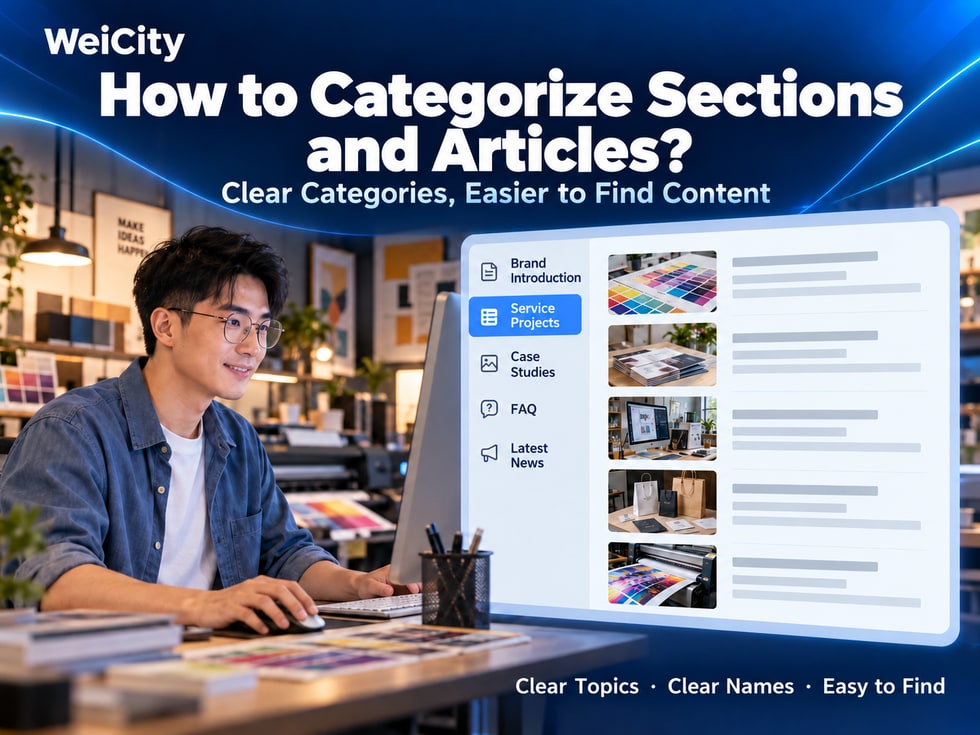
When you first set up a WeiCity merchant channel, you may have only a few articles.
🏪 One merchant introduction.
🛍️ One product or service description.
📋 One service process.
❓ One frequently asked questions article.
At this stage, customers can usually browse easily.
However, as business content keeps growing, the channel may gradually accumulate dozens or even hundreds of articles.
If brand introductions, product guides, service cases, business announcements and frequently asked questions are all mixed together, customers may need more time to find the information they really need.
Based on the section features currently available, WeiCity merchant channels can group articles on different topics together, making channel content more organized and easier for merchants to update and manage over the long term.
📂 Section category: Helps customers determine where to look.
📝 Article content: Answers one specific question in detail.
🏷️ Section name: Lets customers know what is inside.
🧩 Subsection: Further divides topics when there is more content.
🔗 Related content: Helps customers keep browsing the materials they need.
🔄 Regular organization: Reduces repeated, outdated and hard-to-find content.
A clear merchant channel is not just one with many articles; it is one where customers can quickly find the information they need.
Before planning the channel, you need to understand the different purposes of sections and articles.
A section is used to gather content on the same topic.
For example:
🏪 Brand introduction.
🛠️ Service items.
📋 Service process.
🖼️ Case sharing.
❓ Frequently asked questions.
📣 Latest news.
An article is used to introduce one specific topic in detail.
For example, in the "Service Items" section, you can publish:
🔧 What items are included in residential plumbing and electrical repair?
💡 What do you need to prepare before installing light fixtures?
🚰 What should you check first when a water pipe leaks?
You can understand it this way:
📂 Section: Service Items
📝 Article 1: What services are included in residential plumbing and electrical repair?
📝 Article 2: What needs to be prepared before installing light fixtures?
📝 Article 3: How to confirm the service scope for on-site repairs?
📂 Section: Service Process
📝 Article 1: What information is needed for the first repair service consultation?
📝 Article 2: How to confirm the on-site service time?
📝 Article 3: What should be confirmed after the repair is completed?
When a section contains many different topics, you can consider dividing it further.
For example:
📂 Service Items
💡 Electrical installation.
🚰 Pipe repair.
🛁 Bathroom installation.
Whether subsections are supported, how many levels are allowed, and how to set them up depend on the current channel editing page in WeiCity.
📌 Sections organize topics, and articles explain the details. Together, they make the channel structure clearer.
Section categories should prioritize customers' browsing habits.
Do not categorize only by the merchant's internal departments or workflows.
Customers usually do not know how the merchant manages its business internally.
They care more about the problems they want to solve.
You can schedule:
🏪 Brand introduction.
📖 Brand story.
👥 Team introduction.
📍 Business area.
You can schedule:
🛠️ Service items.
🛍️ Product introductions.
📋 Service content.
💰 Price explanation.
You can schedule:
🏠 Completed projects.
🎨 Design work.
📸 Product showcase.
🛠️ Service records.
You can schedule:
📋 Preparation guides.
❓ Frequently asked questions.
📚 Usage instructions.
🛠️ Maintenance knowledge.
You can schedule:
🎉 Event information.
🛍️ New product announcements.
🕒 Business hour changes.
📢 Merchant announcements.
For example, a repair merchant often receives the following enquiries:
"What repair services do you offer?"
"Which areas do you serve?"
“How do I make a booking?”
"Do you have any real case examples?"
"How are the fees calculated?"
These questions can correspond to the following:
🛠️ Service items.
📍 Service coverage.
📋 Service process.
🖼️ Case sharing.
❓ Frequently asked questions.
📌 Planning sections based on customers' questions is easier to understand than simply categorizing by internal business names.
A section name should let customers roughly know what is inside before they click.
🏪 Brand introduction.
🛍️ Product introductions.
🛠️ Service items.
📋 Service process.
🖼️ Case sharing.
📚 User Guides.
❓ Frequently asked questions.
📣 Latest news.
For example:
"Wonderful World"
"More Content"
"Our Story and Future"
"Other Materials"
"General Zone"
These names may not allow customers to tell what the content is.
Original name:
"Wonderful World"
Recommendations:
"Portfolio"
Original name:
"Professional Services and Solutions"
Recommendations:
"Service Items"
Original name:
"More Information and Highlights"
Recommendations:
"Latest News"
Section name: briefly states the topic.
Section "About": further introduces what the section contains.
For example:
📂 Section name: Service Process
Section "About":
"This section introduces service consultations, appointments, requirement confirmation and actual arrangements, helping customers understand what to prepare before contacting the merchant."
If the name is too long, it may be hard to read when browsing on mobile.
Detailed content can be placed in the section introduction and articles.
📌 A good section name should let customers see the direction of the content at a glance.
A common problem in section planning is mixing different classification standards.
For example:
📂 Service introduction.
📂 Plumbing and electrical repairs.
📂 2026 events.
📂 Customer questions.
📂 Penang services.
These sections are classified respectively by content purpose, service type, year and region.
Without clear planning, articles may not know where they should belong.
For example:
📂 Service items.
📂 Service process.
📂 Case sharing.
📂 Frequently asked questions.
📂 Latest news.
For example:
📂 Service Items
💡 Electrical installation.
🚰 Pipe repair.
🛁 Bathroom installation.
For example:
📂 Case sharing
🏠 Residential cases.
🏪 Shop cases.
🏢 Office cases.
You may consider the following situations:
📚 A section already has many articles.
🛠️ The content covers clearly different business types.
🔍 Customers frequently look for specific topics.
📝 The merchant can keep adding related content.
For example:
A section has only one article, and there are no plans to add more in the short term.
In this case, it may not be necessary to split it into multiple subsections.
📌 Establishing clear main categories first, then gradually subdividing based on the amount of content, is usually easier to manage.
There is no fixed number that suits every merchant.
If the channel has just been set up, you can plan a few core sections based on the content you have already prepared.
You could first create:
📂 Service items.
📂 Service process.
📂 Case sharing.
📂 Frequently asked questions.
📂 Latest news.
Because every section needs actual content.
For example:
📂 Service Items
Introduce main services.
📂 Service process
Explain how to consult and make appointments.
📂 Case sharing
Showcase actually completed projects.
📂 Frequently asked questions
Answer questions customers frequently ask.
📂 Latest news
Publish business adjustments and important notices.
For example:
📂 Duplicate section names.
📂 Multiple sections with no articles.
📂 Customers don't know which one to click.
📂 Merchants find it difficult to choose a category when publishing articles.
For example:
The original "Case sharing" section has accumulated many residential and shop cases.
In this case, you may consider subdividing:
🏠 Residential cases.
🏪 Shop cases.
Whether to use subsections should be decided based on the features supported by the current channel.
📌 The number of sections should grow with actual content, rather than creating many blank categories from the start.
Once sections are clearly categorized, articles themselves also need a clear topic.
If one article introduces too many things at once, customers may still find it difficult to find answers.
Title:
"Our Repair Services, Company History, Service Process, Prices, Cases and Promotions"
An article like this covers too many different topics.
📂 Service Items
📝 What services are included in residential plumbing and electrical repairs?
📂 Service process
📝 What do you need to prepare before booking a home repair visit?
📂 Case sharing
📝 Residential light fixture installation case: project details and actual arrangements.
📂 Frequently asked questions
📝 How is the fee for a home repair visit confirmed?
📂 Latest news
📝 Notice of business hour adjustments during public holidays.
You can organize it around the following structure.
🏷️ What is the topic?
📋 What information is needed?
🛠️ What are the practical steps?
⚠️ What Should You Be Aware Of?
💬 How can customers make further enquiries?
If the merchant needs to fully introduce all services, an overview article can be kept.
For example:
"Introduction to Our Residential Repair Services"
Then describe different projects in detail through separate articles.
📌 One main topic per article helps customers find answers more easily and makes it convenient for merchants to update later.
An article title should directly state the content.
After seeing the title, customers can judge whether it is worth clicking.
"What on-site photos are needed before installing a ceiling fan?"
"Residential water pipe leak: what should be confirmed before booking a repair?"
"How to confirm the service area and time for a home repair visit?"
"How to arrange pickup in store? Confirm these details before ordering"
"What should be prepared in advance for group orders?"
"How to view dish prices and optional items on the online menu?"
"Before buying a storage rack, how to confirm the size and installation space?"
"How to choose clothing size? What materials can be referred to before purchase?"
"What is the difference between pre-ordering products and buying in stock?"
"Which grade levels are primary school tutoring courses suitable for?"
"For a first consultation about a course, what can parents prepare?"
"What arrangements should be understood before course registration?"
“How far in advance should I book a graduation bouquet?”
"How to choose colours and budget for a customised bouquet?"
"How should flowers be stored after collection?"
If the article actually introduces services in a certain region, the region can be stated accurately.
For example:
"Penang Residential Repair Services: What to Know Before Booking?"
However, if the article is a general product usage guide, there is no need to deliberately add unrelated regions.
For example:
"Penang Repair, Penang Plumbing and Electrical Repair, Penang Home Repair, Penang Professional Repair"
Such titles are unnatural and not easy to read.
📌 A good article title should naturally include the topic and the questions customers care about.
The following are section planning examples for different business types.
Merchants can adjust them according to actual business and the number of articles.
📂 Restaurant introduction
🏪 Brand story.
🍽️ Food and beverage features.
📍 Store environment.
📂 Dish introduction
🍜 Signature dishes.
🥤 Beverage introductions.
🍰 Dessert features.
📂 Ordering guide
📋 Online ordering process.
🥡 Pickup arrangements.
🚚 Actual delivery instructions.
📂 Frequently asked questions
❓ How to place a booking?
💰 How is the price confirmed?
📅 Do I need to place an order in advance?
📂 Latest news
🎉 Event notices.
🛍️ New arrivals updates.
🕒 Business hour changes.
📂 Brand Introduction
🏪 Merchant background.
📝 Business focus.
📂 Buying Guide
📏 Size selection.
🎨 Style comparison.
📦 Product Specifications.
📂 Use and Care
🛠️ How-to instructions.
🧹 Cleaning tips.
📋 Care instructions.
📂 Frequently asked questions
❓ How to buy.
📦 Pickup arrangements.
💬 After-sales inquiries.
📂 Latest news
🛍️ New product introductions.
📣 Business announcements.
📂 Service Items
🔧 Service types.
📍 Service area.
🛠️ Suitable needs.
📂 Service process
💬 Contact methods.
📅 Appointment arrangements.
📋 Service confirmation.
📂 Case sharing
🏠 Residential cases.
🏪 Shop cases.
🛠️ Completed work records.
📂 Frequently asked questions
❓ How do I request a quote?
📋 What should I prepare?
📅 How do I confirm a time?
📂 Latest news
📣 Service adjustments.
🕒 Business hours notice.
📂 Centre Introduction
🏫 Centre environment.
📚 Teaching focus.
👥 Team introduction.
📂 Course Introduction
📖 Course content.
👧 Suitable grade levels.
📅 Class schedule.
📂 Enrollment Guide
📋 Inquiry Process.
📝 Enrollment preparation.
📅 Course schedule.
📂 Parent Q&A
❓ Course selection.
📚 Study arrangements.
💬 Parent inquiries.
📂 Centre News
🎉 Centre events.
📅 Holiday notice.
📣 Course announcements.
📂 Bouquet Works
🌹 Birthday Bouquets.
🎓 Graduation flowers.
🎁 Festive floral arrangements.
📂 Floral Knowledge
🌿 Flower Care.
💧 Water Changing Methods.
🎨 Colour matching tips.
📂 Ordering Guide
📅 Booking Times.
💰 Budget options.
📦 Pickup arrangements.
📂 Frequently asked questions
❓ Do you accept custom orders?
🎨 Can I choose the colors?
🚚 Is delivery available?
📂 Latest news
💐 New works.
🎉 Holiday arrangements.
📣 Important notice.
Some merchants run into this question:
If products are already in the Product Module, do I still need to write articles?
The two can serve different purposes.
Mainly to display specific product information.
For example:
📦 Product names.
📸 Product photos.
💰 Prices.
📏 Specifications.
🎨 Design.
Mainly to provide further explanation.
For example:
📚 Buying guides.
🛠️ How-to instructions.
📋 Care knowledge.
❓ Frequently asked questions.
🛍️ Products
Models, prices and specifications of electric drills.
📝 Article
“What specifications should I understand before buying my first electric drill?”
🛍️ Products
Graduation bouquet styles and prices.
📝 Article
“How do I choose the colour and size of a graduation bouquet?”
🛍️ Products
Birthday cake styles and sizes.
📝 Article
“What details should I confirm before ordering a birthday cake?”
📌 The Product Module shows specific choices, while Article Sections help customers understand and make decisions.
After reading an article, customers may want to view another related resource.
Therefore, clear navigation guidance can be provided based on actual functions.
Customer reads:
“What does residential plumbing and electrical repair include?”
They may then want to know:
“How do I book a repair?”
You can note at the end of the article:
“To learn what information to prepare before booking, you can continue to the 『Service Process』 section.”
A customer sees an interior renovation case study.
You can further guide them:
“Feel free to view the 『Service Items』 section to learn about the related service scope.”
Customer reads:
“How do I choose a suitable storage shelf size?”
You can further explain:
“To learn about specific styles and specifications, you can view the product categories on the channel.”
After reading the booking instructions, customers may want to ask further questions.
For example:
“To confirm the service area and available booking times, please contact the merchant through the contact details provided on the channel.”
It is recommended to use clear link text.
For example:
“View the lighting installation service introduction”
Compare:
“Click here”
Clear link text makes it easier for customers to understand the purpose of the link.
Confirm:
🔗 The link address is correct.
📱 It opens normally on mobile phones.
📂 The target page still exists.
🔐 Customers have the required access permissions.
📌 Clear navigation guidance between related content helps customers continue exploring more smoothly.
A clear section structure can help organise the topics of your website content.
For merchants hoping to gain visibility through search engines, accurate titles, relevant content and sensible categorisation have practical value.
For example:
📂 Service items.
📂 Buying Guide.
📂 Frequently asked questions.
For example:
“What do I need to prepare before installing a ceiling fan?”
For example:
📂 Floral Knowledge
📝 How do I change the water for fresh flowers?
📝 Where should a bouquet be placed?
📝 How can I reduce premature wilting of flowers?
For example:
The bouquet product introduction and the fresh flower care article can link to each other where appropriate.
For example:
💰 Prices.
📍 Service area.
📅 Event Dates.
🛠️ Service content.
Whether search engines can crawl and index pages also depends on WeiCity platform technical settings, page accessibility, content quality and other factors.
Empty sections, duplicate articles and keyword stuffing do not guarantee search visibility.
📌 For SEO, clear, useful content with a focused topic matters more than simply adding more articles and sections.
As the number of articles increases, it is recommended to review your section structure regularly.
For example:
“How do I book a repair?”
“Service Process” is usually a better fit than “Case Sharing”.
For example:
📂 Service introduction.
📂 Service items.
📂 Our Services.
If content overlaps significantly, consider merging the categories.
For example:
“What should I prepare before booking a repair?”
“What information is needed for an on-site repair consultation?”
If two articles are nearly identical, consider combining them into one more complete article.
For example:
💰 Old prices.
📍 Old service areas.
📅 Past events.
📞 Invalid contact details.
Confirm that links in articles still work properly.
For example:
“Case Sharing” has accumulated a large amount of content.
It can be further categorised as needed.
If the current page allows you to move articles or change their section, check the following after making adjustments:
📂 Articles appear in the correct location.
🔗 Existing links remain valid.
📱 Mobile browsing works normally.
📌 Reviewing sections regularly can reduce duplicate and outdated content and help keep the channel clear over the long term.
Sections are used to organise content on the same topic in one place, making it easier for customers to find.
Sections handle categorisation, while articles provide detailed information on specific topics.
There is no fixed number.
It is recommended to decide based on your actual business and existing content.
Whether subsections are supported, and the specific levels and setup method, depend on the current channel editing page.
It is recommended to keep them short and clear so customers can easily understand them.
It is recommended to choose the section that best matches the article's main topic.
This can be arranged according to content needs, but it is usually recommended to focus on one main topic.
Whether empty sections can be created depends on the current platform features.
From the customer browsing experience, it is recommended to prioritise sections that already have actual content.
You can add explanations on buying, use, care and frequently asked questions as needed.
The Gallery mainly displays images and works.
The article mainly provides a fairly complete written explanation.
If the current editor supports it, you can add accurate links to related content.
Only mention the region naturally when the content genuinely relates to that area.
Not necessarily.
Clear categories and content that is accurate and useful matter more than the number of sections.
Whether this is supported, and how to do it, depends on WeiCity's current management pages.
Consider adjusting when content has clearly increased, sections overlap, articles are hard to find, or important information has changed.
📌 The main purpose of section organization is to help customers find content, not to make the channel structure look complicated.
✅ Section names are clear.
✅ Each section has a clear purpose.
✅ Classification standards are consistent.
✅ There are no large numbers of duplicate sections.
✅ Each article has a main topic.
✅ Titles describe the specific content.
✅ Articles are placed in suitable sections.
✅ The content reflects the actual business.
✅ There is a real need for further division.
✅ Categories are easy to understand.
✅ There are no unnecessary levels.
✅ Product information is placed in the appropriate module.
✅ Articles provide detailed explanations.
✅ Prices and specifications are kept consistent.
✅ Navigation guidance is clear.
✅ Link addresses are correct.
✅ Related pages can be accessed normally.
✅ Titles sound natural.
✅ The topic is clear.
✅ There are no large numbers of duplicate articles.
✅ Keywords are not stuffed unnaturally.
✅ Outdated content has been updated.
✅ Broken links have been fixed.
✅ The section structure matches the current business.
✅ Section names are easy to read.
✅ Article entry points are easy to find.
✅ Customers can browse related content smoothly.
📌 Checking once from the customer's perspective before publishing can help identify unclear categories or content that is hard to find.
When a merchant channel has only a few articles, categorization may seem unimportant.
However, as content gradually increases, a clear section structure becomes more useful.
When customers enter a channel, they may have different needs.
🏪 Want to get to know the merchant.
🛍️ Want to learn about products.
🛠️ Want to view services.
🖼️ Want to browse examples.
❓ Want to find answers.
📣 Want to learn the latest news.
With sensible categorization, different content can have a clear place.
📂 Sections: Help customers determine where to look.
📝 Articles: Answer specific questions in detail.
🏷️ Clear names: Let customers know what each section contains.
🧩 Suitable subsections: Divide content further when there is a lot of it.
🔗 Related content guidance: Help customers keep reading.
🔄 Regular organization: Keep information accurate and orderly.
The value of section planning in the WeiCity Merchant Channel lies not in how many categories you create, but in helping customers quickly find the information they need.
Start with a few clear topics.
Place each article in the right location.
As content grows, gradually adjust and subdivide.
Let your merchant channel not only showcase your business, but also serve as an online information hub where customers can conveniently find products, services, and business updates.
📂 Clear sections help customers find their way more easily.
📝 Clear articles help customers understand the content more easily.
🔗 Orderly content makes browsing and inquiries more convenient.
Specific section hierarchy, subsection functions, article assignment, sorting methods, and editing operations are subject to WeiCity's current merchant channel plan and management pages.
👉 Open WeiCity: https://wei.city/