

15 🎯 What should a paid article cover? Start with the questions customers ask most
Organize questions you are asked repeatedly into professional guides with steps and examples that help readers put the knowledge into practice.
Want to publish a paid article but not sure what to write? Merchants and creators can start with the questions customers ask often and choose topics that need deeper explanation, complete steps, or case studies. This article explains how to turn everyday inquiries into article topics, and how to decide which content is suitable to share for free and which is worth developing into a paid guide.
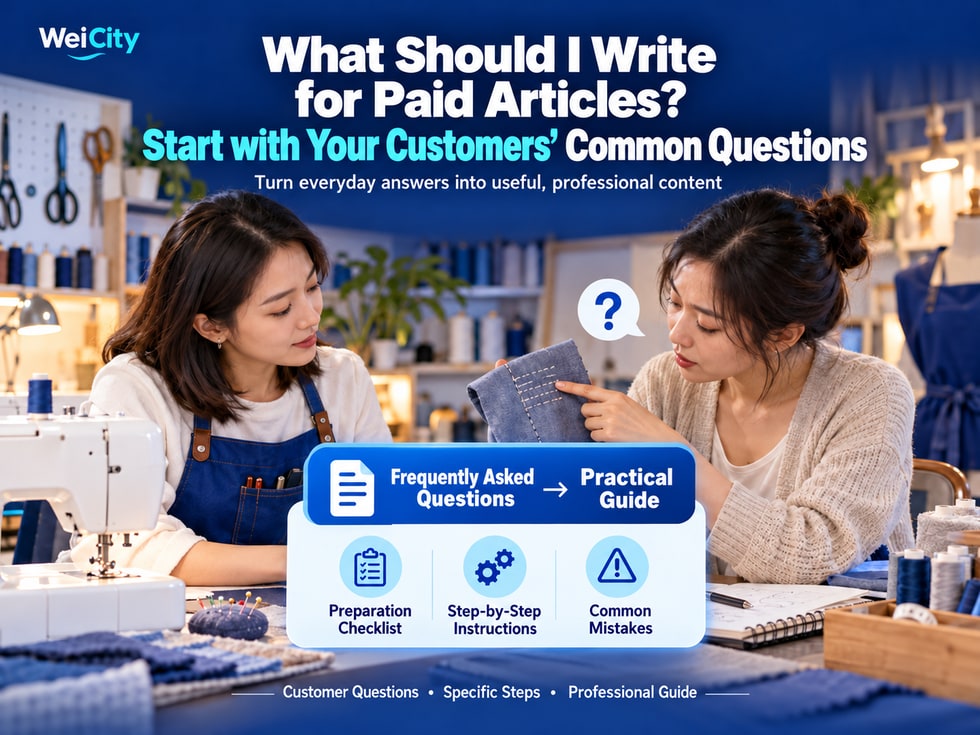
💬 “What content is worth writing about?”
💬 “This knowledge seems very ordinary to me. Will readers need it?”
💬 “Which topic should I write about first?”
The customer questions you answer every day are a starting point for finding topics.
What you are familiar with may be exactly what customers who are just starting to learn, buying for the first time, or facing difficulties want to understand.
Think back to recent consultations, classes, or service sessions:
🔹 Which question do different customers keep asking?
🔹 Which matters do you need to explain step by step?
🔹 After hearing your explanation, where do customers still tend to make mistakes?
🔹 Which questions need images, examples, or checklists to be explained clearly?
These questions can help you identify topics that truly need in-depth organization.
✅ Basic Information
For example, business hours, product prices, service scope, and how to purchase.
This information should be easy for customers to find directly, and can be placed in the channel introduction, product details, or free notes.
✅ Simple Knowledge
For example, how to store coffee beans, how to clean handmade tools, or how to tidy the background before taking photos.
A short free article can fully answer one small question.
✅ In-depth Practical Guidance
For example, complete operating procedures, methods for judging different situations, and analysis and adjustment of common mistakes.
If a topic needs systematic explanation, consider organizing it into a paid article.
🧵 For example, how can a handicraft teacher find topics?
Students often ask:
“Why are my stitches never even?”
You can first organize the specific situations they encounter:
🪡 Stitch lengths vary greatly.
🧵 The thread is pulled too tight, causing fabric to pucker.
📏 Corners tend to become crooked.
✂️ After switching to a different fabric, it's unclear how to adjust.
These problems can form a more specific article:
“Beginner Sewing Practice Guide: From Stitch Control to Corner Handling”
The content covers tool preparation, demonstration steps, error comparisons, and practice methods, so readers can clearly see what this guide can help them practice.
“The Complete Guide to Photography Techniques” covers too much, and readers may find it hard to tell whether it suits them.
It can be narrowed to:
📷 “Photographing Small Products with a Phone: Basic Steps for Background, Lighting, and Composition”
“Plant Care Knowledge” can also be narrowed to:
🌱 “Indoor Potted Plant Watering Guide: How to Check the Soil and Plan Watering”
A clear topic, ideally stating:
Beginners, people with some foundation, or customers facing a specific problem?
❓ What problem it solves
Where is the reader currently stuck?
🛠️ What it helps them accomplish
After reading, what operation can they try or what judgment can they make?
Once the topic is set, you can write in the following order:
① Explain the applicable situations
Help readers judge whether the article fits their needs.
② List preparations
Explain the tools, materials, or background knowledge needed first.
③ Describe the operating steps
Explain in the actual order, making each step as specific as possible.
④ Add examples and common mistakes
Explain where errors are likely to occur and how they can be adjusted.
⑤ Provide a checklist
Help readers review key points while practicing.
The value of an article comes from organizing the problems and methods clearly so readers can understand and apply them more easily.
You can ask yourself:
🔹 Is the content more complete than a simple answer?
🔹 Does it include specific steps, examples, or methods for judgment?
🔹 Has the content promised by the title been fully explained?
🔹 Can readers gain clear, practical help?
🔹 Does it fall within an area where you have experience and can explain accurately?
Frequent customer questions only show that an issue deserves attention. Whether it is suitable to charge for depends on the depth of the content and readers' needs.
Organizing customer questions also helps you understand what customers truly need.
From them, you can identify:
📝 Which product information needs to be added.
📚 Which knowledge is suitable for a free article.
💎 Which in-depth topics are suitable for a paid guide.
These findings can help you improve your content and connect your articles more closely with your daily business.
🚀 Choose your first article from five common questions
Start by writing down the five questions you have been asked most recently, then choose the one you know best and that most needs a detailed explanation.
Turn it into a complete guide that clearly explains the suitable readers and scope of content, then set up paid reading on WeiCity as needed.
👉 Start writing: https://wei.city