

How Musical Instrument and Music Supply Merchants Can Use WeiCity: From Product Showcase to Customer Inquiries
Bring together instrument styles, model specifications, accessory options, and maintenance services so customers can more easily understand products, compare options, and contact your store.
How can musical instrument stores, music supply merchants, recording equipment suppliers, and instrument repair studios use WeiCity? Build a merchant channel that makes it easy for customers to browse, shop, and confirm service arrangements, using product categories, product photos, demonstration content, and inquiry guides.
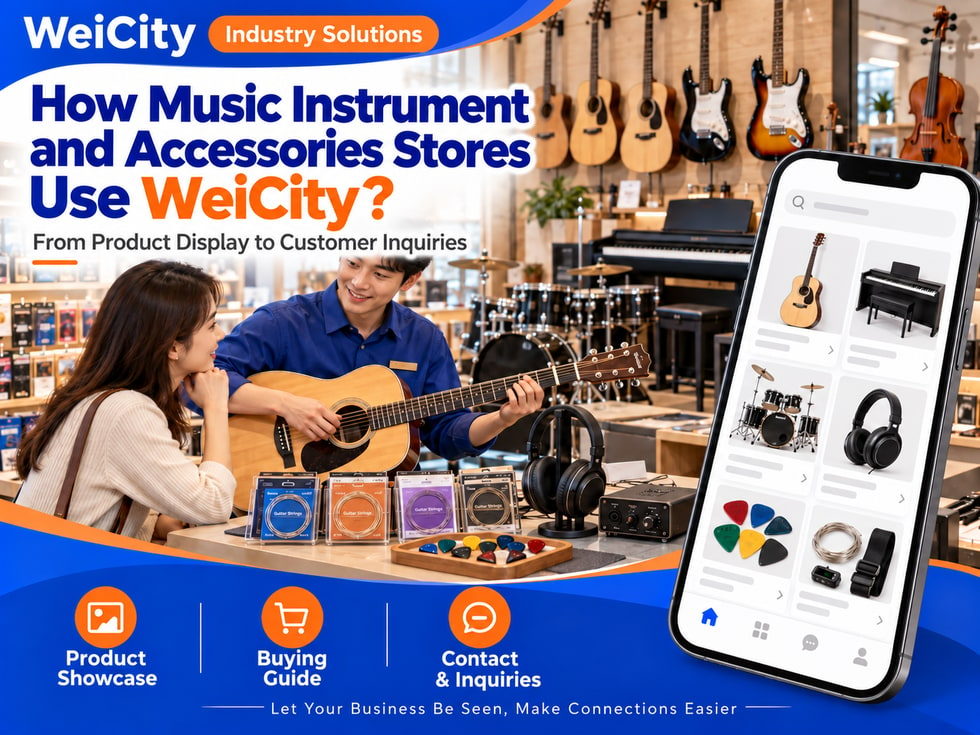
“I'm just starting to learn guitar. Which one should I choose?”
“What features does this electronic keyboard have?”
“Does the instrument come with accessories?”
“Can I try playing it in the store?” “My guitar string broke. Do you offer replacement service?”
When choosing an instrument, customers usually first learn about the type, then compare the model, feel, sound, budget, and future maintenance.
💡 Through WeiCity, you can create your own merchant channel and organize your instruments, accessories, and service information so customers can browse first and then contact the store with specific needs.
✅ General Instrument Store Showcase the musical instruments and music products actually sold.
✅ Guitar and String Instrument Merchant Introduce models, specifications, accessories, and related services.
✅ Piano and Keyboard Instrument Merchant Showcase the products actually supplied and delivery arrangements.
✅ Drum and Percussion Merchant Organize instruments, accessories, and kit contents.
✅ Recording and Music Equipment Merchant Introduce the microphones, audio interfaces, and related equipment actually operated.
✅ Instrument Maintenance and Repair Studio Describe the inspection, adjustment, and repair services actually undertaken.
📌 Instrument sales, lessons, rentals, and repairs are different services and should be explained separately according to actual business scope.
You can organize by instrument type and purpose:
🔹 Guitars and Related Products Classify by acoustic guitars, electric guitars, and the categories actually operated.
🔹 Pianos and Keyboard Instruments Showcase model, configuration, and feature information.
🔹 String Instruments Organize by instrument type, size, and series.
🔹 Drums and Percussion Instruments Explain single pieces, sets, and included components.
🔹 Recording and Music Equipment Classify by purpose, interfaces, and system requirements.
🔹 Accessories and Maintenance Supplies Organize strings, stands, cases, cables, and other products.
💡 Start with the main categories and representative models, then add detailed specifications and usage references.
It is recommended to state:
✅ Brand and full model number
✅ Product Type and Dimensions
✅ Material or Main Configuration
✅ Available colors
✅ Features and Interfaces, if applicable
✅ Packaging and included components
✅ Whether ordering is required
✅ Warranty and Service Arrangements
🔶 Example: Acoustic Guitar Introduction
Model: Indicate the exact name. Specifications: Fill in dimensions and structure according to product information. Material: Introduce the actual configuration of the corresponding model. Color: Show the available styles. Included items: Explain whether a case, picks, or other accessories are included. Inquiry: Contact us to confirm stock, price, and trial play arrangements.
📌 Different versions within the same series may have different configurations; images, models, and actual products sold should correspond.
It is recommended to prepare:
🔹 Overall Photo Show the instrument's appearance and proportions.
🔹 Key Structures For example, the neck, bridge, keyboard, and control panel.
🔹 Model Label Helps customers verify the exact product.
🔹 Interfaces and Accessories Show parts that need to be connected or paired.
🔹 Packaging and Delivery Contents Explain what is actually included with the purchase.
💡 Photograph the instrument from the front, back, and close-up details, rather than using only a distant photo.
📌 Whether stands, speakers, headphones, or other props shown in the display are included should be explained separately.
If you have actual recorded content, you can display it:
✅ Corresponding brand and model
✅ Settings used in the demonstration
✅ Whether it is connected to other devices
✅ Whether post-processing has been applied
✅ Features shown or playing excerpts
✅ How in-store experiences are arranged
💡 Short videos can focus on a single feature, such as switching keyboard tones or how the electronic drum kit is played.
📌 Recording environment, equipment, and playback method all affect how the sound is perceived. Demonstrations are for reference only and cannot fully replace an in-person test or listening session.
You can ask customers to explain:
1️⃣ The instrument you are interested in Guitars, keyboards, drums, or other products.
2️⃣ Your experience Whether you are a first-time learner or upgrading existing equipment.
3️⃣ Main purpose Home practice, lessons, performances, or recording.
4️⃣ Existing product information If available, please provide the model and accessories.
5️⃣ Space and portability needs Please state whether you need storage, moving, or volume control.
6️⃣ Budget range Please specify whether you would like essential accessories included.
7️⃣ Preferred model Please provide the product number or a reference image.
🔶 Example:
“Please share the instrument type, your experience, intended use, and budget. We will introduce suitable available products and then confirm specifications and in-store experience arrangements.”
📌 Beginner products also come in different sizes and features. Compare them based on specific needs rather than deciding based only on the “beginner” label.
It is recommended to state:
✅ Size information for the corresponding model
✅ Whether in-store playing or listening is available
✅ Whether an Appointment Is Required
✅ Scope of trial and store rules
✅ Whether basic setup is provided
✅ Which services incur additional charges
💡 When choosing an instrument for children, parents can share relevant needs and arrange a hands-on experience.
📌 Age and height can be used for preliminary discussion. Final size and usage conditions still need to be confirmed based on the instrument type and actual circumstances.
Please describe them according to the product information:
🔹 Number of keys or main configuration
🔹 Labeled keyboard or playing action
🔹 Built-in functions
🔹 Speakers and audio output
🔹 Headphone jack
🔹 USB, MIDI, or other connection methods
🔹 Power supply and supporting requirements
🔶 Example:
“If you need to connect a computer, headphones, or other devices, please provide the existing device models and the functions you hope to achieve. We will first check the ports and compatibility requirements.”
📌 Ports that look the same do not necessarily support the same functions. Connection and system requirements should be confirmed for the specific model.
You may ask customers to provide:
✅ Complete model of the instrument or device
✅ Existing port information
✅ Devices you wish to connect
✅ Intended use
✅ Existing cables and accessories
✅ Whether installation or setup is needed
💡 Commonly used accessory combinations can be displayed together, with an explanation of what each product does.
📌 Microphones, audio interfaces, headphones, and other devices should be checked for connection, power, and system requirements before the combination is confirmed.
It is recommended to state:
🔹 Model and configuration corresponding to the price
🔹 Whether sold individually or as a set
🔹 Accessories included in each set
🔹 Whether setup and installation are included
🔹 Whether shipping is charged separately
🔹 Whether ordering is required
🔹 Deposit and payment arrangements
🔶 Example:
“The displayed price applies to the model and included items described. Please confirm extra accessories, shipping, and other services before purchase.”
📌 The price of the instrument alone should be distinguished from the price of a complete package, so customers do not assume every item shown is included.
If the related service is actually offered, customers can be asked to provide:
1️⃣ Brand and model Helps us understand the structure and accessories.
2️⃣ Problem description Describe noises, malfunctions, damage, or other issues.
3️⃣ Photos of the problem area Show both the overall view and key details.
4️⃣ Recent handling State whether parts were replaced or repairs were carried out before.
5️⃣ Desired completion date Helps us confirm inspection and scheduling.
🔶 Example:
“Please share the instrument model, problem description, and related photos. We will first confirm the scope of service; specific handling methods, fees, and timing will be explained after inspection.”
📌 Tuning, setup, maintenance, and repair may be separate services. Clearly state what is actually included.
Suggested details to explain:
✅ Delivery location
✅ Floor and elevator conditions
✅ Doorway, corridor, and turning dimensions
✅ Vehicle parking and loading/unloading conditions
✅ Whether professional moving is needed
✅ Whether assembly or setup is included
✅ How the item is checked at delivery
💡 For pianos or other large products, placement and site access conditions can be checked in advance.
📌 Delivery to an address, moving to a designated position, and completing setup are different services. State separately whether each one is included.
Suggested product description:
🔹 Daily Cleaning Methods
🔹 Storage environment requirements
🔹 Replacement of accessories and consumables
🔹 Regular inspection or maintenance arrangements
🔹 Warranty period and scope
🔹 Conditions for return repair or on-site service
🔹 How to submit feedback about issues
🔶 Example:
“For after-sales service, please provide the model, purchase information, and a description of the issue. We will confirm arrangements based on the corresponding product and actual service scope.”
📌 Maintenance requirements can differ between instrument materials and electronic devices, so one method should not be applied to everything.
You may ask customers to provide:
✅ Usage scenario
✅ List of instruments and supplies
✅ Model or specification requirements
✅ Quantity of each item
✅ Intended users
✅ Desired delivery date
✅ Whether delivery and setup are needed
✅ Whether substitute products are acceptable
🔶 Example:
“Please share the procurement list, quantities, and dates from your school or organization. We will confirm products, quotations, and delivery arrangements based on our actual supply capacity.”
📌 Substitute models should be checked for configuration and usage requirements, and arrangements should be made only after the customer confirms.
🔹 About Us Introduce the store, business direction, and service scope.
🔹 Instrument Categories Organized into guitars, keyboards, strings, and percussion.
🔹 Accessories and Music Equipment Show specifications, ports, and included items.
🔹 Product Demonstrations and Buying Guide Help customers understand features and inquiry requirements.
🔹 Maintenance and Repair Explain inspection, setup, and handling procedures.
🔹 Ordering, Delivery, and After-Sales Organize supply, transportation, and service arrangements.
💡 When you are just starting, you can first add main categories, representative models, and an inquiry guide, then add demonstrations and detailed information.
🔶 Customer asks: “I’m just starting to learn guitar. What can I choose?”
You can reply: “Hello, here are our guitar models. Please share your usage needs, budget, and whether you need accessories, and we will help you compare the products actually available.”
🔶 Customer asks: “Can this electric piano connect to a computer?”
You can reply: “Please provide the model numbers of the electric piano and computer, and tell us the functions you want to achieve. We will first check the ports, system, and supporting conditions.”
🔶 Customer asks: “Can you help me replace the strings?”
You can reply: “Please provide the instrument model and the current string information. We will confirm the available products, service fees, and in-store arrangements.”
1️⃣ Basic merchant information Name, address, business hours and contact details.
2️⃣ Main instrument and supply categories Organize the products actually sold.
3️⃣ Representative images and demonstrations State the model, configuration, and supporting conditions.
4️⃣ Buying and Repair Guides Tell customers what information they need to provide.
5️⃣ Delivery and after-sales information Organize trial, ordering, shipping, and maintenance arrangements.
✅ Do the model, version, and images match?
✅ Are the size, configuration, and ports accurate?
✅ Are accessories and package contents clear?
✅ Do the demonstrations state the relevant conditions?
✅ Are the trial and repair scopes specific?
✅ Are delivery and warranty details clear?
✅ Are the contact details correct?
Once instruments, specifications, and inquiry guidance are organized in the channel, they can support everyday promotion, customer replies, and communication with school and organization buyers.
Customers can learn about your products first, then share their use, configuration, and service needs. Merchants can use this information to confirm options, quotations, and delivery arrangements.
Want to know how to set up a musical instruments and music supplies merchant channel?
Feel free to contact us through the WeiCity official channel, and we can organize display content suitable for your store together.
WeiCity Make your business visible, and make contact easier.