

Ernest Hemingway
Ernest Hemingway (born July 21, 1899 – died July 2, 1961) was an American novelist, short-story writer, and journalist, known for his concise writing style and themes of courage, war, and human endurance. He was one of the most influential writers of the 20th century and won the Nobel Prize in Literature in 1954.
Key Achievements & Contributions:
📚 Famous Novels – Wrote classics like The Old Man and the Sea, A Farewell to Arms, The Sun Also Rises, and For Whom the Bell Tolls.
📰 War Correspondent – Covered World War I, the Spanish Civil War, and World War II, influencing his writing.
🏅 Pulitzer Prize Winner (1953) – Won for The Old Man and the Sea.
🎖️ Nobel Prize in Literature (1954) – Recognized for his powerful storytelling and unique prose style.
🌍 Adventurous Life – Lived in Paris, Cuba, and Africa, and was known for his love of travel, hunting, and deep-sea fishing.
Legacy & Impact:
- Pioneered a minimalist, impactful writing style known as the “Iceberg Theory.”
- Shaped modern literature with his direct and realistic approach to storytelling.
- Inspired generations of writers with his themes of bravery, struggle, and resilience.
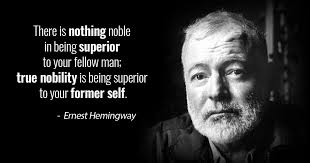
📢 Famous Quote: “There is nothing noble in being superior to your fellow man; true nobility is being superior to your former self.”