

18 🎁 Lower prices are not always better: how do you attract customers while protecting profit?
💰 Use new-customer experiences, bundle packages, and time-limited promotions to encourage action, while protecting profit and brand value
💡 Promotions are not more effective simply because prices are lower. A valuable promotion should have a clear goal, reasonable cost, simple conditions, and a clear call to action. This article explains how merchants can attract customers through new-customer experiences, bundle packages, spend-threshold gifts, and limited-time offers, while avoiding long-term price cuts that harm profit and brand image.
Many merchants hope to attract new customers through promotional activities.
The most direct method is usually a price reduction.
Original price RM50, now RM39.
Buy two, the second item is half price.
Uniform discount on all products in the store.
These methods can certainly attract attention, but if costs are not calculated and there is no clear campaign goal, merchants may not necessarily earn more even when orders increase.
An effective promotion is not just about making products cheaper. It makes it easier for customers to decide to buy while allowing merchants to keep a reasonable profit.
Every promotion should have one main goal.
If the goal is unclear, merchants can easily keep lowering prices just to attract customers.
Common promotion goals include:
• Attracting first-time new customers
• Increasing the average amount of each order
• Encouraging customers to buy bundled products
• Filling slower business periods
• Promoting new products or services
• Winning back customers who have not made a purchase for some time
• Clearing seasonal products or inventory that is about to be replaced
• Encouraging customers to return and buy again
First determine the most important goal, then choose a suitable promotion method.
A single campaign does not need to solve every problem at the same time.
Besides direct discounts, merchants can also attract customers by adding value.
Customers get more, and merchants do not need to significantly lower the price of their main products.
Common promotion formats include:
🎁 New Customer Welcome Gift
First-time buyers or first-time bookers can receive a small gift, trial product, or additional service.
📦 Bundle Packages
Combine two or three products that are often bought together to offer a package price that is more convenient than buying them separately.
🛍️ Spend-and-Get Gifts
After customers reach a specified spending amount, they can receive a small gift with controlled cost.
➕ Add-On Offers
After buying a main product, customers can add related products at a special price.
⏰ Off-Peak Time Offers
Offer limited promotions on dates or times with fewer customers to help merchants use idle periods better.
🔁 Repeat Purchase Offers
After the first purchase, offer customers a repeat-purchase benefit they can use next time.
🎉 Festival Limited Campaigns
Launch limited products, gift boxes, or packages based on festivals, holidays, or seasons, rather than cutting prices uniformly on all products.
These methods can make promotions more attractive while protecting the value of main products.
Merchants should not only look at the selling price. They also need to calculate the actual cost of completing an order.
You may consider:
• Product or material cost
• Packaging cost
• Delivery or shipping cost
• Payment processing fees
• Additional labor time
• Gift cost
• Return, exchange, or after-sales cost
• Promotional marketing cost
You can use a simple calculation method:
Expected campaign earnings = Amount actually paid by the customer − Product cost − Packaging and delivery cost − Fees − Additional labor and gift costs
For example, an item has an original price of RM50, and its direct cost is RM25.
If the promotional price is RM40, the remaining amount before calculating packaging, fees, and labor is RM15.
If the additional costs total RM7, the amount that can finally be kept is only RM8.
Therefore, the discount may look like only RM10, but the actual profit may have decreased a lot.
⚠️ Each merchant's cost structure is different. Before a promotion starts, recalculate using your own actual data.
Bundle packages can help customers reduce the time spent choosing and can also increase order value.
For example:
• Coffee and dessert set
• Hair wash and scalp care package
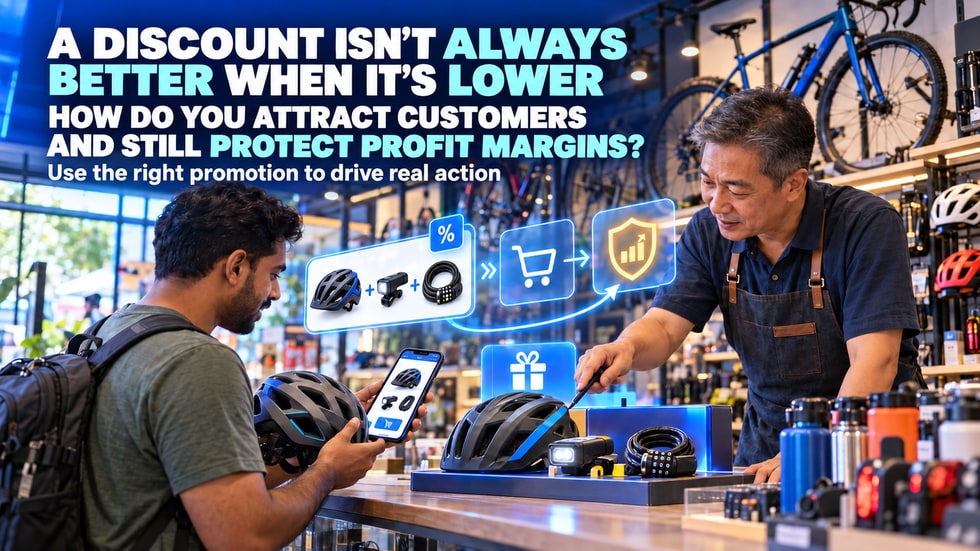
• Bicycle helmet, light, and lock combination
• Course and textbook combination
• Cleaning service and disinfection service combination
• Gift and packaging and delivery combination
When designing a package, choose products that are related to each other and that customers are likely to need together.
Do not force unrelated products together just to clear inventory.
A good package should make customers feel it is more convenient, rather than making them buy things they do not need.
After seeing a promotion, customers should be able to quickly understand the following:
• What the promotion offers
• Which customers can take part
• How much value customers can receive
• When the promotion starts
• When the promotion ends
• Whether there is a minimum spending requirement
• Whether it applies only to specified products or time periods
• How customers should buy, book, or make an inquiry
Do not just write "Limited-time offer" or "Special discount" without explaining the specific content.
If customers need to keep asking questions, the campaign's conversion effect will decline.
A complete campaign description can be written like this:
🎁 New customers who book the specified service for the first time can receive one free basic check.
📅 Campaign dates: October 15 to October 31.
📌 Applies to new customers booking for the first time, limited to one use per person.
👉 Click the inquiry button and send "New Customer Experience" to complete the booking.
Clear campaign rules can reduce misunderstandings and help customers take action more quickly.
🍽️ Restaurant Merchants
• Lunch set with a main dish and a drink
• Limited to off-peak time slots
• Family dining set
• Free specified snack with festive meal bookings
🛍️ Retail Merchants
• Bundle price for related products
• Receive a small gift when you spend a set amount
• Discounted add-on accessories after purchasing the main product
• Seasonal limited gift box
💇 Beauty and Care Merchants
• Basic experience for new customers
• Multi-service combo package
• Weekday off-peak booking discount
• Receive a next-care courtesy benefit after completing a service
🛠️ Local Service Merchants
• First home inspection discount
• Basic service plus maintenance package
• Free transportation fee in specified areas
• Thank-you gift for existing customers who refer new customers
🎓 Education and Course Merchants
• First trial lesson
• Course and textbook combination
• Receive one review lesson when enrolling in a series of courses
• Family member joint enrollment benefit
🎨 Creators and Professional Service Merchants
• Basic consultation plus execution plan
• Standard service bundle
• Receive an additional item when booking within a specified period
• Renewal benefit for returning customers
Promotional content should let customers see the key points at a glance.
You can organize it in the following order:
1️⃣ Promotion title
Use one sentence to explain what customers can get.
2️⃣ Eligible customers
Specify whether the promotion is for new customers, returning customers, members, or all customers.
3️⃣ Promotion details
Clearly list the package, gift, discount, or add-on service.
4️⃣ Promotion period
State the start and end dates.
5️⃣ Conditions of use
Explain the minimum spend, specified time slots, eligible products, and number of uses.
6️⃣ Call to action
Provide consultation, booking, purchase, or payment options.
7️⃣ Reminders
Explain quantity limits, booking requirements, or other important information.
Do not hide all conditions in small print on images.
The text should be complete so customers can understand the promotion even without enlarging the image.
Reasonable time or quantity limits can help customers make decisions sooner.
You can use real and clear limits:
• The promotion runs only on specified dates
• Only a fixed number of appointment slots are open each day
• Gifts are limited and available while stocks last
• The package applies only to specified products
• Bookings must be paid in advance
Do not use fake countdown timers, and do not say "last day" every day.
If customers notice that a so-called limited-time offer is always running, they will stop trusting the merchant's promotions.
After a promotion ends, do not look only at the number of orders.
Merchants can record:
• How many people asked questions after seeing the promotion
• How many inquiries turned into orders
• The average amount of each order
• The actual profit on promoted products
• How many new customers made their first purchase
• How many customers bought the combo package
• How many customers purchased again after the promotion
• Which type of promotion brought in the customers best suited to the merchant
More orders do not necessarily mean the promotion was successful.
If sales volume rises significantly but profit is too low, the workload is too heavy, or after-sales issues increase, the promotion design needs to be adjusted.
• Setting a discount without calculating costs
• Cutting prices on all products at the same time
• Unclear promotion goals
• Overly complicated conditions
• Not stating the promotion period
• Images and text showing different prices
• Not removing outdated information after a promotion ends
• Using false quantities to create urgency
• Attracting only customers looking for the lowest price
• Not providing a clear purchase entry point for customers
Relying on price cuts over the long term may also teach customers to wait for discounts and reluctant to buy at regular prices.
Merchants can complete the following steps:
⏱️ Minutes 0 to 5: Set the goal
Choose one goal: attracting new customers, increasing order value, or encouraging repeat purchases.
🧮 Minutes 5 to 10: Calculate costs
Confirm that the promotional price can still cover products, labor, and other expenses.
🎁 Minutes 10 to 15: Choose the promotion format
Choose one from a new-customer gift, combo package, spend-and-get gift, add-on discount, or off-peak offer.
📝 Minutes 15 to 20: Write the conditions clearly
List the promotion content, dates, eligible customers, and usage restrictions.
📱 Minutes 20 to 25: Set the call to action
Tell customers whether they should inquire, book, or buy directly.
✅ Minutes 25 to 30: Check and publish
Use your phone to check the text, prices, images, and contact options, then publish the promotion to the WeiCity merchant channel.
• Does the promotion have a clear goal?
• Does the promotion still retain a reasonable profit?
• Can customers easily understand the promotion?
• Are the start and end dates clear?
• Are the conditions of use complete?
• Do the prices in the images match the text?
• Do the inquiry or purchase entry points work properly?
• Can the merchant handle the expected number of orders?
• Is a channel update scheduled for after the promotion ends?
Complete these checks before officially launching the promotion.
The real role of a promotion is to help customers who already have a need find it easier to start buying.
It should not force merchants to keep lowering prices, nor should it make customers appear only when there is a discount.
An effective promotion should:
• Be easy for customers to understand
• Have conditions that are easy to carry out
• Offer products and services with real value
• Let merchants keep a reasonable profit
• Create opportunities to keep building customer relationships after the promotion ends
👉 Put your promotion on the WeiCity merchant channel so customers can see the offer, understand the conditions, and complete an inquiry, booking, or purchase directly.