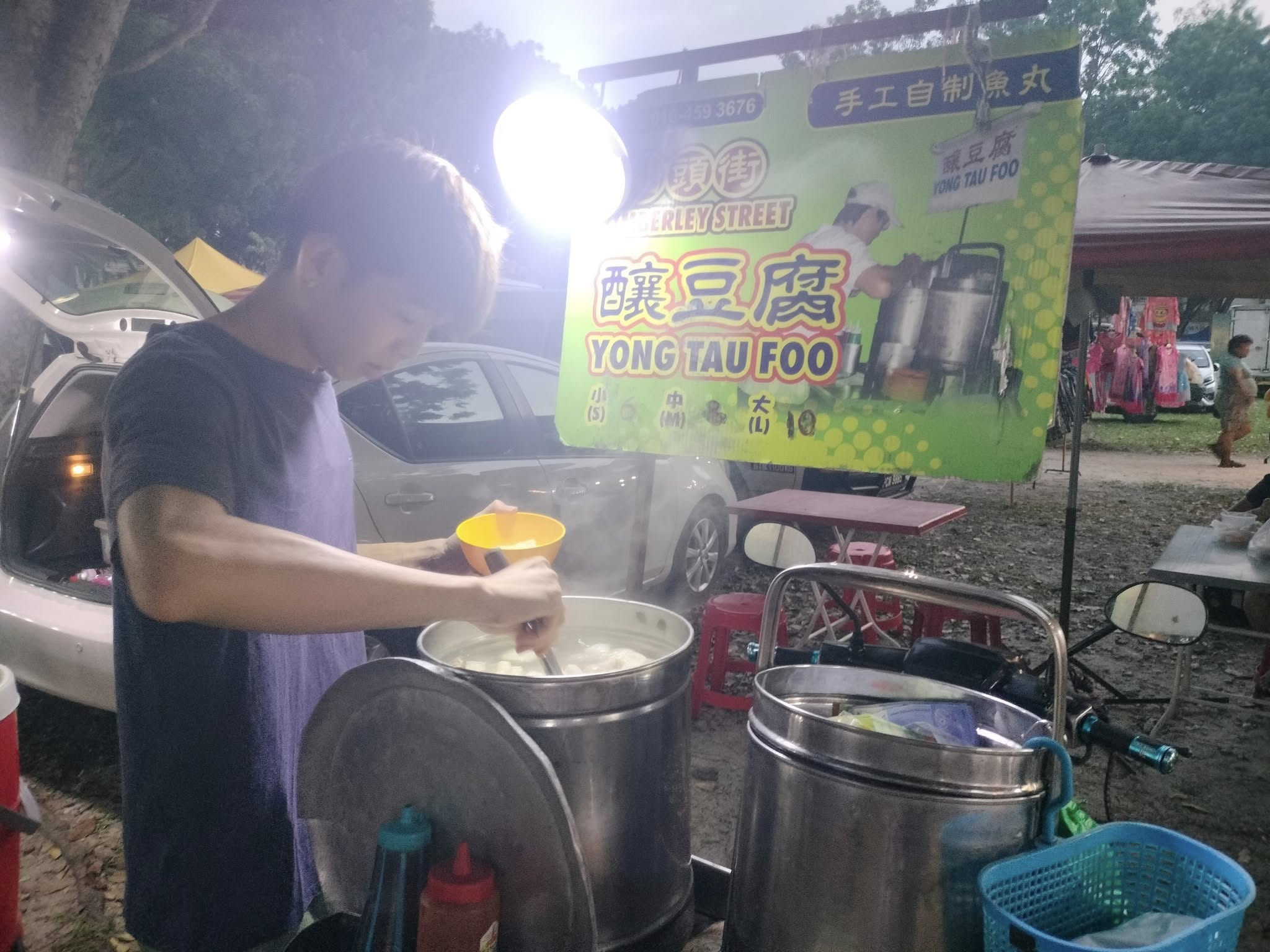
Yong Tau Foo (酿豆腐) is a beloved Hakka Chinese dish consisting of tofu and vegetables stuffed with a savory meat or fish paste.
1. History and Origin (历史与起源)
- Hakka Roots: The dish originated from the Hakka (客家) people in China.
- The Legend of Dumplings: Legend has it that when the Hakka people migrated from Northern to Southern China, they missed their traditional dumplings (jiaozi). However, wheat flour (used for dumpling skins) was scarce in the south, while tofu was abundant.
- The Innovation: To recreate the "stuffed" feeling of a dumpling, they began stuffing meat fillings into tofu instead. This resourceful adaptation eventually spread to Southeast Asia (Malaysia and Singapore) with the Hakka diaspora.
- 客家起源: 这是一道源远流长的客家名菜。
- 饺子的替代品: 传说客家人从北方南迁时,非常怀念北方的饺子。但南方麦粉较少,而大豆制成的豆腐却很丰富。为了寻找家乡的味道,他们便把肉馅塞进豆腐里,以此替代饺子。
- 下南洋: 随着客家人移居南洋,这道菜在马来西亚和新加坡演变成了如今多样的形式。
2. Explanation and Preparation (解析与做法)
- The Name: In the Hakka dialect, "Yong" (酿) means "to stuff" or "to fill." Thus, Yong Tau Foo literally means "Stuffed Tofu."
- The Filling: Traditionally, a mix of minced pork and salted fish was used. In Southeast Asia, this evolved into a fish paste (surimi) made from Spanish Mackerel or Ikan Parang to suit local tastes and availability.
- Modern Varieties: While it started with just tofu, it now includes stuffed lady’s fingers, eggplants, chilies, bitter gourd, and fried bean curd skins (fuzhu).
- Serving Styles: It can be served "dry" (with sweet bean sauce and chili sauce) or in a clear soup base (often flavored with soybeans and dried anchovies).
- 含义: 在客家话中,“酿”的意思是“塞入肉馅”。因此,“酿豆腐”就是“塞了肉的面包/豆腐”。
- 馅料: 传统馅料使用猪肉和咸鱼。在东南亚,为了迎合本地口味,逐渐演变为使用鱼胶(通常用西刀鱼或马鲛鱼制成)。
- 现代多样化: 除了豆腐,现在的“酿料”还包括酿秋葵、酿茄子、酿辣椒、酿苦瓜以及炸腐竹等。
- 吃法: 分为**“干捞”