

5 📝 What Should a Merchant Channel Include? Organizing Frequently Asked Customer Questions into Content
Find the information customers need from real inquiries, then place it in suitable introductions, product descriptions, or articles.
Not sure what to add to your merchant channel after setting it up? Start with the questions customers ask often. This article explains how to collect and categorize inquiries, decide whether an answer belongs in the business introduction, product or service description, or an article, and uses examples from retail, repair, and education businesses to help merchants organize practical content so customers can more easily understand the business and contact them with questions.
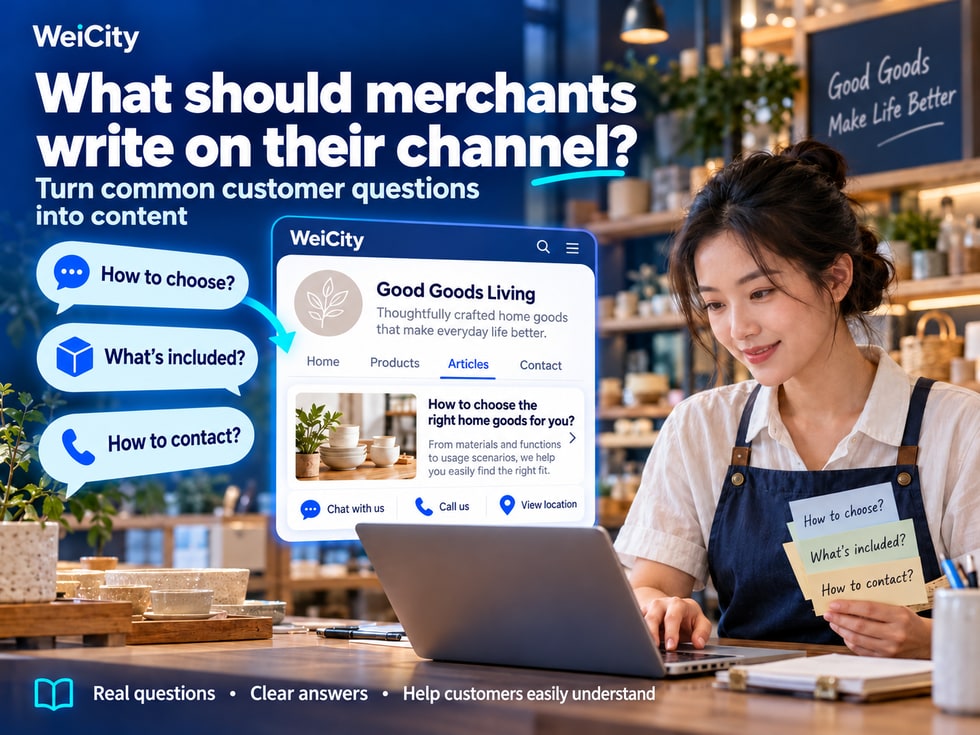
After setting up an online channel, merchants may have already filled in basic introductions and uploaded product photos, but are not sure what content to publish next.
In fact, the content most worth organizing often comes from the questions customers ask every day.
For example:
🛍️ "Does this product come in other sizes?"
📍 "Can you serve the area where I live?"
📚 "What do I need to prepare for the first lesson?"
📦 "Can I pick up my purchase in store after buying?"
🛠️ "What information do I need to provide before booking a repair?"
These questions may seem simple, but they show that when customers are learning about a product, comparing services or deciding to buy, they still lack certain information.
💡 Organizing frequently asked customer questions into product descriptions, service introductions, FAQs or practical articles can make the WeiCity merchant channel easier to use and provide direction for website content and Google SEO.
Many merchants think that running an online channel requires constantly coming up with new promotional topics.
In reality, the questions customers ask every day are a very valuable source of content.
Think back over your usual inquiries:
📱 WhatsApp messages.
📞 Phone inquiries.
🏪 Questions from customers in store.
💬 Facebook or other social media comments.
📧 Email inquiries.
Start by recording common questions. There is no need to rewrite them into formal articles right away.
📌 "Does this garment run large?"
📌 "Does this product come in other colors?"
📌 "Can you deliver to Penang?"
📌 "Do you provide on-site repair services?"
📌 "What should I prepare before a repair?"
📌 "Can I get a quote based on photos first?"
📌 "What age group is the course suitable for?"
📌 "What should I prepare for the first consultation?"
📌 "Can I book a visit?"
📌 "Can I order food in advance?"
📌 "What does this set meal include?"
📌 "Can I collect my order in store?"
When recording questions, keep only the questions themselves.
Do not put customer names, phone numbers, addresses, chat screenshots or other personal information that does not need to be public directly into articles.
📌 Questions customers repeatedly ask are often the content a merchant channel should prioritize adding.
After collecting questions, you can organize them according to how customers browse and make choices.
This makes it easier to plan articles and helps merchants identify which information has not yet been prepared fully.
Customers may want to know:
❓ What do you mainly sell or offer?
❓ What services do you provide?
❓ Which areas do you serve?
❓ Who is your business suitable for?
These questions are suitable for the merchant introduction or related information.
Customers may want to know:
❓ What specifications does the product come in?
❓ What items does the service include?
❓ What are the features of the product?
❓ Are there any related case studies?
These questions are suitable for product or service descriptions.
Customers may want to know:
❓ What is the difference between the different styles?
❓ How should I choose the right size?
❓ Which service is right for me?
❓ What should I be aware of before buying?
These questions are usually suitable for organizing into buying guides or practical articles.
Customers may want to know:
❓ What is included in the price?
❓ Are there any additional fees?
❓ In which situations is a separate quote required?
❓ Is advance payment required?
These questions should be explained clearly based on your actual pricing method.
Customers may want to know:
❓ How do I place an order?
❓ Can I pick up my order in store?
❓ How do I book a service?
❓ What information do I need to provide?
These questions are suitable for purchase notes, booking instructions or service processes.
Customers may want to know:
❓ How do I use the product?
❓ How should I maintain it?
❓ Who can I contact if there is a problem?
❓ What are the after-sales conditions?
These questions can be organized into usage guides or after-sales information.
📌 Categorizing by the process customers go through to learn about you can make channel content more organized.
After collecting questions, you do not necessarily need to turn all of them into standalone articles.
First, decide where customers will look for the answer.
Suitable for:
🏷️ Brand and business information.
📍 Main service areas.
👥 Target customers.
💬 Basic contact information.
Suitable for:
📏 Product specifications.
💰 Prices and terms.
📦 What is actually included.
🛠️ Service scope.
📝 Purchase or booking notes.
Suitable for:
📱 Phone and WhatsApp.
📍 Address.
🕒 Opening hours.
🚚 Delivery or service areas.
Suitable for questions that need more detailed explanation.
For example:
🛍️ How to confirm device size before buying a laptop bag?
🛠️ What information should be prepared before booking an on-site repair?
📚 What can parents prepare before a first course consultation?
🍽️ How to estimate suitable portions when ordering meals for a group?
If the answer only needs one sentence, it can usually be placed directly in the relevant information.
If you need to explain steps, compare different options or provide real examples, consider writing an article.
📌 Placing answers where customers need them most is more important than simply increasing the number of articles.
Merchants do not need to prepare dozens of articles at the start.
If time is limited, you can start with the most important questions.
✅ Questions that many different customers repeatedly ask.
✅ Questions that easily cause misunderstanding.
✅ Questions that must be confirmed before purchase or booking.
✅ Questions that affect price, service scope or delivery arrangements.
If a merchant does not explain its service areas, customers may only find out after inquiring that they are outside the service range.
Therefore, you can prioritize preparing:
📍 Description of on-site repair service areas.
📸 Which photos are needed to request a quote?
📝 What should be prepared before booking a repair?
If customers frequently ask about sizing, you can prioritize preparing:
📏 Product size guide.
👕 How do I choose the right fit?
📦 What should I confirm before buying?
If parents often ask about the first consultation process, you can prepare the following first:
👩🏫 Which learning needs does the course suit?
📋 What should I prepare for the first consultation?
📅 How do I book a course introduction or visit?
📌 Add information that affects customers' decisions first, so channel content can become useful more quickly.
Merchant articles do not necessarily need complicated professional wording.
You can answer in three steps.
Help customers quickly find the key point.
Explain which situations apply, and which parts need further confirmation.
Let customers know what to prepare, or how they should get in touch.
Customer question:
“Can you provide on-site repair services?”
Sample answer:
“We provide on-site repair services in designated areas.
Before inquiring, please provide your location, a description of the problem, and on-site photos so we can confirm the service area and arrangements.
Fees and timing will be discussed further based on specific circumstances.”
This explanation includes three key points:
📍 Whether the service is available.
📸 What information is needed.
💬 How to confirm the next step.
Compared with simply writing “Welcome to inquire”, customers can more easily tell what they should prepare.
📌 Answer the question first, then explain the conditions, and finally provide next-step guidance.
Suppose a merchant selling laptop bags often receives this question:
“Can this bag fit my laptop?”
If the product description only says:
“Stylish laptop bag, suitable for work and everyday use.”
Customers may still be unable to judge whether it suits their device.
For example:
📐 External dimensions of the bag.
💻 Internal dimensions of the laptop compartment.
🧵 Materials and structure.
📦 Accessories actually included.
📌 Whether the thickness of a laptop protective sleeve needs to be considered.
This information can be placed directly in the corresponding product description.
If customers often do not know how to measure their laptop, you can write an article:
💻《How to Confirm Laptop Size and Storage Space Before Buying a Laptop Bag?》
The article can cover:
① How to confirm the actual length, width, and thickness of a laptop.
② Why you should not only look at the screen size in inches.
③ How to compare the laptop with the internal space of the bag.
④ What to note when using a protective sleeve.
⑤ Which information to confirm with the merchant before buying.
The product description explains the actual specifications of this laptop bag.
The article teaches customers how to judge whether it suits them.
If the channel supports related links, you can guide readers in the product description:
“Not sure how to choose the size? See the laptop bag sizing guide.”
📌 Product descriptions address specific specifications, while practical articles help customers learn how to choose.
Repair, renovation, cleaning, and other service merchants often need customers to provide information before they can confirm arrangements further.
For example:
“How do I get a quote for repair services?”
📌 Type of device or item.
📌 Brand and model.
📌 The problem that occurred.
📌 When the problem occurred.
📌 On-site photos or short videos.
📌 Location.
📌 Preferred date.
This information can first be placed in the service introduction.
For example:
🔧《What Information Do I Need Before Booking On-Site Repair?》
The article can further explain:
① How to describe a device problem.
② Which photos help explain the situation.
③ Why the device model needs to be provided.
④ How to confirm the service area.
⑤ How to confirm repair fees and timing.
“If you need to ask about repair services, please first prepare the device model, a description of the problem, and related photos.
For detailed preparation steps, see 《What Information Do I Need Before Booking On-Site Repair?》.”
Please note:
Actual repair scope, fees, and timing should be explained according to real service conditions.
Content that is uncertain should not be written as fixed promises.
📌 Organizing repeated quote questions into a guide can help customers provide more useful information.
Education providers' customers are usually parents.
Before deciding to inquire or enroll, parents may want to understand the course audience, teaching content, and schedule arrangements.
📚 What age groups does the course suit?
🧒 Which learning needs does it suit?
👩🏫 What will be covered in the first consultation?
📋 What information needs to be prepared?
📅 How do I book a visit?
🕒 How is the course schedule arranged?
Course introduction page
Instructions:
📖 Course content.
👥 Suitable learners.
📅 Basic schedule.
💬 Contact methods.
Practical articles
Can further explain:
📋 What should be prepared for the first course consultation?
🏫 What can be learned when visiting the education center?
📚 How can parents compare different course schedules?
🧒 What can be asked of the institution before enrolling?
When content involves children's learning, development, or personal circumstances, related privacy should be protected.
Do not publicly disclose the following without appropriate authorization:
❌ Student names.
❌ Identifiable student photos.
❌ Individual student personal records.
❌ Unnecessary family information.
If you need to introduce real case studies, confirm usage permission and avoid disclosing unnecessary personal information.
📌 Educational content should help parents understand the course and consultation process, rather than make students' private circumstances public.
When there is a connection between product descriptions, service introductions, and articles, clear guidance can help customers keep browsing.
For example:
Product name:
Commuter Laptop Bag Model A
Related content:
《How to Confirm Device Size Before Buying a Laptop Bag?》
Service name:
Residential On-Site Repair
Related content:
《What Information Do I Need Before Booking a Repair?》
Course name:
Children's Learning and Development Course
Related content:
《What Can Parents Prepare for the First Course Consultation?》
The merchant introduction can guide customers to:
🔧 View service items.
📸 Browse related cases.
📝 Read frequently asked questions.
💬 Find contact information.
It is recommended to use text that describes the target content.
For example:
✅ View the laptop bag sizing guide.
✅ Learn the on-site repair booking process.
✅ Read the first course consultation checklist.
Try to avoid having all links read only:
❌ Click here.
❌ See more.
❌ Learn details.
If the link text clearly describes the target page, customers can usually decide more easily whether to open it.
📌 Connecting related content can reduce the need for customers to repeatedly search for information.
The questions customers ask every day can also serve as a reference for planning Google SEO content.
Because these questions often contain the words customers actually use.
For example:
🛍️“How do I choose the right laptop bag size?”
🛠️“What should I prepare for on-site repair?”
📚“What should I ask in a first tutoring consultation?”
🍽️“How do I choose portion sizes for group ordering?”
These questions can help merchants decide article topics.
Original question:
“Will the laptop bag fit my laptop?”
Article title:
《How to Choose a Laptop Bag Size? A Guide to Confirming Laptop Size and Storage Space Before Buying》
Original question:
“What should I prepare before repair?”
Article title:
《What Should I Prepare Before Booking On-Site Repair? A Guide to Device Information, On-Site Photos, and Quote Requests》
Original question:
“What should I bring to the first class?”
Article title:
《What to Prepare for Your First Course? A Pre-Class Guide for Parents and Students》
If the merchant actually provides location-based services, you can naturally describe the service area in the relevant content.
For example:
📍 Penang home repair services.
📍 George Town furniture store.
📍 Beihai course consultation.
However, there is no need to repeatedly pile city names into every article.
✅ Keep the title consistent with the main topic of the body text.
✅ Answer customers' questions directly.
✅ Use specific product or service names.
✅ Provide genuine and accurate information.
✅ Link to related content where appropriate.
✅ Regularly check for outdated information.
Please note:
Frequently asked customer questions can provide valuable SEO content directions, but publishing an article does not guarantee Google indexing or search rankings.
Actual performance is also affected by page accessibility, website technical settings, content quality, and other factors.
📌 Write the answer customers really need first, then consider how to help search engines understand the content.
After an article is published, merchants can still observe whether customers keep asking the same questions.
If many customers still ask repeatedly, it may mean the existing explanation is not clear enough.
📝 Is the answer easy to find?
Is it placed in the relevant product or service description?
🏷️ Is the wording easy to understand?
Are there any technical terms that customers may not be familiar with?
📏 Is the information complete?
Is any size, specification, or specific condition missing?
📸 Are images needed?
Some questions may be easier to explain with a diagram.
📍 Is the scope of applicability clear?
Has the service area, booking conditions, or purchase arrangements been explained?
If customers often ask:
“How wide is this storage cabinet?”
You can add the dimensions to the product description.
If customers often ask:
“Are the decorations in the photo included?”
You can explain what is actually included in the purchase.
If parents often ask:
“What should I prepare for the first consultation?”
You can add a simple preparation checklist.
If prices, specifications, business hours, or service areas change, the related content should also be checked at the same time.
📌 A merchant channel is not finished once it is written. It can be continually improved based on actual customer enquiries.
A merchant channel does not necessarily need a large number of articles published at once.
You can start with the five questions customers ask most often.
💬 Step 1: Collect Questions
Organize common enquiries from WhatsApp, phone calls, in-store conversations, and social media.
🗂️ Step 2: Categorize Questions
Distinguish between merchant introduction, products and services, fees, purchases, bookings, and after-sales questions.
🎯 Step 3: Choose Priorities
Give priority to questions that affect customers' purchase or booking decisions.
✍️ Step 4: Write Clear Answers
Answer directly, and add applicable conditions and next-step guidance.
📍 Step 5: Place Content in Suitable Locations
Put simple information in product or service descriptions, and write articles only for content that needs detailed explanation.
🔗 Step 6: Connect Related Content
Let customers continue reading related guides from product, service, or course descriptions.
🔄 Step 7: Keep Updating
Add or revise information based on new questions and business changes.
Because it does not require merchants to look for brand-new promotional topics every day.
Instead, it gradually organizes customer enquiries that have already happened into content that can be reused.
For retail, food and beverage, repair, renovation, education, and other local merchants, this content can help customers to:
🏪 Get to know the merchant more quickly.
🛍️ Understand products and services.
🤔 Compare different options.
📋 Know what to prepare before purchasing or booking.
💬 Contact the merchant with clearer questions.
📝 Start from the questions customers ask every day, and organize the answers into clear, practical, and easy-to-find content, so the WeiCity merchant channel better fits real business needs.
🌐 WeiCity | Helping merchants turn everyday customer questions into practical content, helping customers move from finding answers and understanding the business to further contact and taking action.
👉 Learn about the WeiCity Merchant Channel: https://wei.city